
Why More Patients Are Turning to Physical Therapy Before Surgery
7 min. read
Baptist Health Orthopedic Care
For someone dealing with persistent knee pain, a nagging shoulder injury or an aching hip, surgery can sometimes seem like the inevitable next step. Increasingly, however, orthopedic care begins somewhere else: with conservative treatments designed to reduce pain, restore movement and help patients return to the activities they enjoy without resorting to surgery.
Physical therapy is often central to that approach. Depending on the diagnosis, patients may also benefit from activity modification, medications, bracing or injections, including platelet-rich plasma (PRP) therapy.
At Baptist Health Orthopedic Care, the emphasis is on finding the treatment that best matches the patient's condition, lifestyle and goals. Sometimes that means surgery. But for many common musculoskeletal problems, nonsurgical care can be an appropriate place to start.
Why Conservative Treatment Often Comes First
Musculoskeletal pain has many causes, and an injury that is painful or limiting does not necessarily require an operation.
“Many patients come to us worried that seeing an orthopedic specialist automatically means they are headed for surgery, and that simply isn’t the case,” says Michael Swartzon, M.D., sports medicine physician at Baptist Health Orthopedic Care. “When it’s medically appropriate, we want to explore conservative treatments that can relieve pain, improve function and help the patient get back to the activities that matter to them.”
A sports medicine physician can evaluate symptoms, perform a physical examination and use imaging when necessary to determine what is causing the problem. From there, treatment may include physical therapy, changes in activity, medication, bracing or injections.
The decision is highly individual. The best approach for an active 30-year-old with a tendon injury, for example, may differ substantially from the treatment recommended for a 70-year-old with osteoarthritis.
“There is no single treatment pathway that works for everyone,” says Alex Mafdali, M.D., a primary care sports medicine physician with Baptist Health Orthopedic Care. “We look at the diagnosis, the severity of the condition, the patient’s overall health and, importantly, what that person wants to be able to do. Then we build a treatment plan around those factors.”
What Physical Therapy Can Do
Physical therapy is more than a series of exercises. A rehabilitation program can address specific physical limitations contributing to pain or loss of function.
"Physical therapy isn’t second best to surgery,” says Dr. Swartzon. “It’s a safe, powerful treatment that can completely fix the problem."
Depending on the condition, therapy may focus on strength, flexibility, balance, range of motion and movement patterns. A physical therapist can also teach patients how to modify activities while an injury heals and how to progress safely toward normal activity.
“Physical therapy can help us address some of the underlying reasons a patient is having difficulty, whether that’s weakness, stiffness, loss of mobility or the way the body is moving,” Dr. Swartzon says. “For the right condition, improving those factors can make a significant difference in both pain and function.”
Therapy also gives the healthcare team an opportunity to see how a patient responds over time. Improvement may support continuing conservative treatment. Persistent pain or declining function despite an appropriate course of therapy may signal that additional evaluation or another treatment is needed.
The objective is not to keep a patient in therapy indefinitely or to delay a necessary procedure.
“Conservative treatment needs to have a purpose,” Dr. Mafdali says. “We establish goals, monitor the patient’s progress and adjust the plan when necessary. If someone is getting stronger, moving better and returning to normal activities, that tells us something. If they are not improving as expected, that also gives us important information about what should come next.”
When PRP Therapy May Enter the Picture
For some patients, platelet-rich plasma (PRP) therapy may be another nonsurgical option.
PRP is prepared from a patient’s own blood. After blood is drawn, it is processed to create a concentrated preparation of platelets, which contain growth factors involved in the body’s natural healing processes. The PRP is then injected into the targeted area.
The treatment has received considerable attention in sports medicine, but it is important to understand that PRP is not a universal treatment for orthopedic pain. Evidence for its effectiveness varies depending on the condition, and patients need an appropriate diagnosis before deciding whether it should be considered.
“PRP is one tool within a much larger nonsurgical treatment strategy,” Dr. Swartzon says. “The goal is to use the patient’s own concentrated platelets to support the body’s healing response in a specific area. But patient selection is very important. We have to understand what tissue is injured and whether there is evidence that PRP may be useful for that particular problem.”
PRP may be considered for select patients with certain tendon conditions or osteoarthritis, often after more traditional conservative measures have not provided sufficient improvement.
“Patients hear a lot about regenerative treatments, especially PRP, and naturally they want to know whether these treatments can help them avoid surgery,” Dr. Mafdali says. “The answer depends on the diagnosis. PRP may be reasonable for certain conditions, but it should be considered as part of an individualized treatment plan rather than viewed as a cure-all.”
Conservative Care Does Not Mean Avoiding Surgery at All Costs
The growing emphasis on nonsurgical treatment does not mean surgery should always be postponed.
Some injuries require surgical repair, and advanced arthritis or significant structural damage may ultimately make an operation the most effective option. The purpose of conservative care is to give appropriate patients an opportunity to improve without surgery while making sure their condition is monitored.
“If a patient has a condition that clearly needs surgery, our goal isn’t to put up unnecessary roadblocks,” Dr. Swartzon says. “It’s about making sure we have the right diagnosis and that we’ve considered reasonable options. When surgery is the best treatment, we want the patient to reach that decision with a clear understanding of why.”
Physical therapy can also remain valuable when an operation becomes necessary. Depending on the procedure, rehabilitation after surgery can help patients regain mobility, strength and function. Some patients may also undergo therapy before an operation to improve strength and conditioning in preparation for recovery.
Knowing When It Is Time to Reevaluate
A common question is how long patients should continue conservative treatment before considering something else. There is no universal timeline.
The answer depends on the condition, its severity, how long symptoms have been present and how the patient responds to treatment. A mild overuse injury may improve relatively quickly, while chronic degenerative problems can require longer-term management.
Patients should be reevaluated if pain is worsening, function continues to decline or symptoms interfere significantly with work, sleep, exercise or everyday activities despite treatment.
“We don’t define success only by what an X-ray or MRI looks like,” Dr. Mafdali says. “We also want to know whether the patient can walk comfortably, exercise, work, play with their children or grandchildren, or return to their sport. Function and quality of life are major parts of the conversation.”
Certain symptoms may also require more immediate medical attention. Sudden inability to bear weight, significant weakness following an injury, a visibly deformed joint or severe swelling are among the reasons to seek prompt evaluation rather than simply trying to exercise through the problem.
A More Personalized Path to Recovery
The shift toward conservative orthopedic care changes the first question many patients ask. Instead of starting with, “Do I need surgery?” the conversation can begin with, “What is causing my symptoms, and what is the best way to restore my function?”
For some patients, the answer may be physical therapy. Others may benefit from rehabilitation combined with medication, activity modification or an injection. Selected patients may be candidates for PRP. And for some conditions, surgery will remain the most appropriate treatment.
What matters is matching the intervention to the individual rather than assuming that every orthopedic problem follows the same path.
“The goal isn’t simply to avoid surgery,” Dr. Mafdali says. “The goal is to help the patient recover in the safest, most effective way possible. If we can accomplish that with conservative treatment, that can be a very good outcome. And if surgery ultimately becomes necessary, the patient can move forward knowing that the decision is based on their condition, their progress and their goals.”
Featured Providers
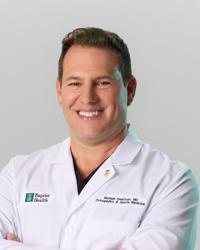
Michael Swartzon, MD
Michael Swartzon, M.D., is a dual board-certified physician specializing in family medicine and sports medicine at Baptist Health. He is dedicated to the prevention and treatment of illness and injury, helping patients lead healthier lives and return to the activities they love.
Dr. Swartzon specializes in non-operative treatments for musculoskeletal conditions and utilizes advanced techniques, including orthopedic ultrasound diagnostics, non-surgical fracture management, sports -relation concussion management, ultrasound-guided procedures, and regenerative orthobiological therapies such as stem cell and platelet-rich plasma (PRP).
He is a team physician for the Miami Dolphins, Florida Panthers, and Inter Miami CF, as well as a tournament physician for the Miami Open. Dr. Swartzon also serves as co-medical director for the Miami Marathon & Half Marathon and provides care for collegiate teams, including Barry University and St. Thomas University. Additionally, he has supported major events such as El Clásico, the World Golf Championship Doral, and the NCAA Men’s Basketball Tournament.
He holds academic appointments as the program director for Florida International University’s Primary Care Sports Medicine Fellowship, an associate professor at Florida International University, and an affiliate professor at Nova Southeastern University.
He is a published researcher and frequent speaker at national and international conferences on sports medicine. Dr. Swartzon is a member of several professional organizations and is committed to advancing the field of sports medicine through education and innovation.
A South Florida native, Dr. Swartzon is passionate about supporting local sports teams and enjoys staying active in the community.
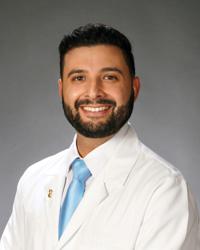
Alex Mafdali, MD

Trusted Orthopedic Care to Keep You Moving
Related Stories
View All Articles

Fall Prevention: Simple Steps to Help Older Adults Stay Safe and Independent
September 14, 2026
6 min. read

Why Strength Training Is Essential Medicine for Aging Adults
September 1, 2026
5 min. read