
Understanding Hernia Repairs: What Every Patient Should Know
5 min. read
A bulge that appears when you cough or lift something heavy can be unsettling. For many people, it turns out to be a hernia—one of the most common conditions treated by general surgeons.
Understanding what a hernia is, when it needs attention and how it can be treated can help you make confident, informed decisions about your care, says Benjamin Reed, M.D., a general surgeon with Baptist Health.
What Is a Hernia?
The word “hernia” describes a group of related conditions rather than a single problem. A hernia occurs when tissue—often fat or part of the intestine—pushes through a weak spot or opening in the muscle or connective tissue that normally holds it in place.
“Patients sometimes think a hernia is one specific thing, but it’s really an umbrella term,” says Dr. Reed. “The symptoms, the urgency and the best treatment all depend on where the hernia is, how large it is and whether anything has become trapped.”
Common signs include a visible or noticeable bulge, along with discomfort, pressure, burning or pain. These symptoms may worsen when you cough, lift, bend or stand. Some hernias cause few or no symptoms at all.
One important point to remember, Dr. Reed says, is that hernias generally don't heal or close on their own, though not every hernia needs immediate surgery.
Types of Hernias
Hernias are grouped by where they develop:
• Inguinal hernia: In the groin; the most common type
• Femoral hernia: Near the upper thigh or groin, seen more often in women
• Umbilical hernia: At or near the belly button
• Incisional hernia: Through the site of a previous abdominal operation
• Ventral or epigastric hernia: Elsewhere along the front of the abdominal wall
• Hiatal hernia: When part of the stomach moves through the diaphragm into the chest.
According to Dr. Reed, inguinal hernias alone are estimated to affect more than one in four men and about 3 percent of women during their lifetime.
What Raises Your Hernia Risk?
A hernia usually reflects a combination of an existing weak area and forces that repeatedly increase pressure inside the abdomen. Important risk factors include:
• Male sex, particularly for inguinal hernias
• Older age, as muscles and connective tissue weaken
• Family history or inherited connective-tissue traits
• Previous abdominal surgery, prior hernia or hernia repair
• Pregnancy, especially multiple pregnancies
• Obesity, particularly for ventral and incisional hernias
• Smoking, which can impair collagen formation and wound healing
• Chronic coughing, constipation or straining
• Difficulty urinating, sometimes linked to an enlarged prostate
• Heavy or repetitive lifting
“People often blame lifting for causing their hernia, but that’s usually not the whole story,” Dr. Reed explains. “In many cases, lifting simply makes an existing weakness noticeable. The weak spot was already there.”
When Is a Hernia an Emergency?
Most hernias aren’t urgent, but certain warning signs call for immediate care. Seek emergency treatment when the hernia:
• Suddenly becomes much more painful
• Becomes firm, tender, red or discolored
• Can't be pushed back in when it previously could
• Suddenly becomes larger
• Is accompanied by fever
• Occurs with abdominal swelling, vomiting or an inability to pass stool or gas
These symptoms can signal either incarceration, when tissue becomes trapped, or strangulation, when its blood supply is cut off. Both are extremely dangerous.
“Strangulation is a true emergency,” says Dr. Reed. “When the blood supply is compromised, intestinal tissue can be injured or die. That situation requires surgery right away.”
Hernia Treatment Options
Not every hernia needs an operation. Some adults with a small, reducible hernia that causes little discomfort may be monitored rather than treated immediately—an approach known as watchful waiting.
“These patients should know which symptoms to watch for and seek care if their hernia enlarges or becomes painful,” Dr. Reed advises. “Support belts or trusses may ease discomfort temporarily, but they don’t repair the underlying defect.”
When surgery is needed, it returns the tissue to its proper place and closes or reinforces the weak area. The main approaches are:
• Open repair: The surgeon starts with an incision over or near the hernia.
• Laparoscopic repair: The surgeon works through several small incisions using a camera and instruments.
• Robot-assisted repair: The surgeon controls robotic instruments through small incisions from a console.
Mesh is commonly used to reinforce weakened tissue and reduce the chance of the hernia returning, especially for larger repairs.
“Mesh isn’t required in every case, and avoiding mesh doesn’t automatically make surgery safer,” Dr. Reed notes. “What matters most is matching the right repair to the right patient, and the surgeon’s experience with that repair."
Reducing Risks Before Surgery
With modern surgical techniques and mesh materials, surgeons can repair even very large and complex hernias. The more important question, according to Dr. Reed, is not simply whether a hernia can be repaired, but whether surgery should be performed at that time.
Surgeons must weigh the potential benefits against the possibility of complications that could significantly affect a patient’s recovery, health and quality of life. Smoking, obesity and diabetes can all increase the risks associated with hernia surgery.
“Smoking raises the likelihood of breathing problems and wound complications, while excess weight can make the operation more technically difficult and increase the risk of infection or other wound-healing problems,” Dr. Reed notes. “Poorly controlled diabetes can also interfere with healing.”
Prior to hernia repair, some patients may benefit from nutrition counseling, physical therapy, medical or surgical weight-loss treatment, blood sugar control or other forms of “prehabilitation” before surgery.
Every hernia and every patient is different, says Dr. Reed.
“The goal is to develop an individualized plan that gives each patient the best chance of a successful operation,” he says. “The best outcomes come from a plan built around you—your health, your goals and your specific type of hernia.”
Click here for more information about hernia repair services and specialists at Baptist Health.
Featured Provider
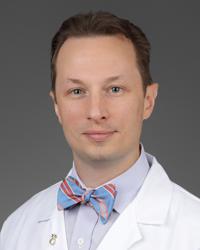
Benjamin Laurel Reed, MD
Benjamin Reed, M.D., is a board-certified general surgeon at Baptist Health with expertise in abdominal wall reconstruction and foregut disease. As part of Baptist Health’s general surgery team, he focuses on complex revisional hernias, enterocutaneous fistulae, reflux treatment and revisional foregut surgery. He also participates in the Americas Hernia Quality Collaborative, using clinical data to support quality improvement in hernia care.
Prior to joining Baptist Health, Dr. Reed was a general surgeon and minimally invasive surgery fellow at Prisma Health Upstate in Greenville, South Carolina. During his fellowship, he worked with national leaders in abdominal wall reconstruction and foregut disease.
A graduate of Duke University, Dr. Reed served as a U.S. Army medic and received numerous awards. He followed his military service with two years working as a paramedic before earning his medical degree from Case Western Reserve University School of Medicine and completing a general surgery internship at University Hospitals Case Medical Center. He subsequently finished a residency at West Virginia University and a fellowship in minimally invasive and bariatric surgery at Prisma Health.
Dr. Reed is active in the American College of Surgeons and the Society of American Gastrointestinal and Endoscopic Surgeons. He serves as a reviewer for Surgical Endoscopy and has published work on trauma surgery, bariatric surgery and abdominal wall reconstruction. He currently serves on the faculty at Florida International University, building on prior teaching roles at the Medical University of South Carolina — Greenville and the Division for Military and Austere Medicine and Surgery at West Virginia University.
Dr. Reed prioritizes shared decision-making and strives to understand each patient’s goals so he can recommend care that supports quality of life. During his free time, Dr. Reed enjoys hiking, reading Shakespeare and playing retro video games.

Your Partner for Everyday Health and Wellness
Related Stories
View All Articles
From Triple Bypass to Full Speed: One Patient's Seamless Road to Recovery
September 29, 2026
10 min. read
Video

Treated for Endometrial Cancer Two Years Ago, She Now Has a Healthy Baby Boy
September 24, 2026
5 min. read

How Minimally Invasive Brain and Spine Surgery Is Changing Recovery
August 20, 2026
6 min. read