
Stroke Alert: Four Key Warning Signs You Might Not Recognize
4 min. read
Baptist Health Brain & Spine Care
A stroke doesn’t always look dramatic. Someone may not collapse or lose consciousness. Instead, a person sitting across from you at breakfast may suddenly drop a coffee cup. A coworker may begin stumbling over familiar words. Someone driving may abruptly complain that they can’t see clearly out of one eye.
Or you may simply notice that a person who seemed perfectly fine moments ago is suddenly struggling to do something that normally comes easily.
That sudden change is an important clue, says cerebrovascular neurologist Felipe De Los Rios, M.D., the Irma Bass Endowed Chair in Stroke Neurology and director of the stroke program at Baptist Health Kenneth C. Griffin Neuroscience Institute.
“At one time you were fine and then all of a sudden, out of the blue, you’re not,” Dr. De Los Rios explains.
For World Stroke Day on October 29, Baptist Health stroke specialists say recognizing those sometimes-unexpected warning signs—and acting immediately—can save brain function, reduce disability and potentially save a life.
A Stroke May Not Look Like What You Expect
Stroke occurs when blood flow to part of the brain is interrupted, most commonly by a clot (an ischemic stroke), or when a blood vessel in the brain ruptures and bleeds (a hemorrhagic stroke).
Because different parts of the brain control different functions, the symptoms depend on which part of the brain is affected, and symptoms can vary considerably from one person to another, Dr. De Los Rios notes.
That means stroke may show up as sudden weakness or numbness, but it can also cause abrupt problems with vision, balance, language or coordination.
Guidance from the U.S. Centers for Disease Control and Prevention (CDC) includes these four symptoms among the major warning signs of stroke:
1. Sudden difficulty seeing, walking or speaking
2. Dizziness or loss of balance
3. One-sided weakness or numbness; confusion
4. A sudden severe unexplained headache
In everyday life, that might mean someone suddenly veers to one side while walking, reaches for a countertop because the room seems to spin, sees double, drops an object because one hand no longer works properly or begins saying words that don’t make sense.
Sometimes the person having the stroke may not even recognize what is happening.
“Sometimes the person who’s having the problems doesn’t realize it, but someone else does,” Dr. De Los Rios says. That makes awareness among family members, friends and coworkers especially important.
Beyond ‘BE FAST’
“BE FAST” remains an excellent tool for remembering many common stroke warning signs:
B — Balance: Sudden loss of balance, dizziness or trouble walking
E — Eyes: Sudden vision loss, blurred vision or double vision
F — Face: One side of the face droops or feels numb
A — Arms: Sudden weakness or numbness in one arm
S — Speech: Slurred speech, difficulty speaking or trouble understanding
T — Time: Call 911 immediately.
Brian Snelling, M.D., director of cerebrovascular and endovascular neurosurgery and director of the stroke program at Marcus Neuroscience Institute at Boca Raton Regional Hospital, part of Baptist Health, calls the acronym “a powerful tool because it simplifies stroke recognition for the public.”
But patients and families shouldn’t wait for every letter of “BE FAST” to appear, he cautions. A single sudden neurological change can be enough to warrant emergency evaluation.
A severe, unexplained headache deserves particular attention, he adds. While most headaches are not strokes, an abrupt and exceptionally intense headache can accompany bleeding in or around the brain, including a ruptured cerebral aneurysm.
Dr. Snelling has treated patients with subarachnoid hemorrhage, a type of bleeding that can occur after an aneurysm ruptures. Such events can also cause nausea, vomiting, weakness and vision changes.
The common thread is suddenness, he says. A symptom that appears abruptly—especially one affecting strength, speech, vision, balance or coordination—should raise concern.
Even If It Goes Away, Call 911
Another potentially dangerous misconception is that symptoms are less serious if they disappear.
Brief stroke-like symptoms may represent a transient ischemic attack, or TIA, sometimes called a “mini-stroke.” Although symptoms resolve, a TIA can be a warning that a larger stroke may follow.
“Some people are lucky enough to get that warning that something bad is potentially going to happen,” Dr. De Los Rios says. The key, he adds, is not to ignore it.
If stroke is suspected, doctors advise calling 911 rather than driving the person to the hospital. Emergency medical teams can begin evaluating the patient, communicate with a stroke center and alert specialists before arrival.
With Stroke, Every Second Counts
“Seeking care immediately is of vital importance,” Dr. Snelling says.
Treatments for stroke may include clot-dissolving medications for some ischemic strokes or mechanical thrombectomy, a minimally invasive procedure that removes certain large clots from blood vessels in the brain. Which treatment is appropriate depends on factors including the type of stroke, its location and how much time has passed.
“When it comes to stroke, time is brain,” Dr. Snelling says. “Every second counts.”
The takeaway for families is straightforward: Don’t spend precious minutes trying to decide whether a strange symptom is “really” a stroke.
If a person suddenly cannot see normally, speak clearly, understand you, use an arm or leg, maintain balance—or develops an unexplained severe headache unlike anything they have experienced before—call 911.
With stroke, what looks like a small or puzzling change can be the brain’s urgent call for help.
Click here for more information on stroke services and specialists available at Baptist Health Brain & Spine Care.
Featured Providers
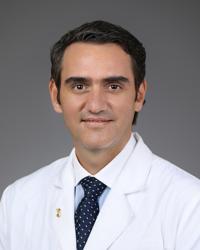
Felipe De Los Rios La Rosa, MD
Felipe De Los Rios La Rosa, M.D., is a cerebrovascular neurologist, the Irma Bass Endowed Chair in Stroke Neurology and director of the stroke program at Baptist Health Kenneth C. Griffin Neuroscience Institute. Dr. De Los Rios specializes in adult neurology, stroke treatment and vascular neurology. He is fluent in English and Spanish.
Prior to joining Baptist Health in 2016, Dr. De Los Rios served as the director of stroke and cerebrovascular diseases at SANNA Healthcare Network in Lima, Peru.
Dr. De Los Rios has been director of the stroke program at Baptist Health Baptist Hospital since 2016. Under his leadership, the program has undergone consecutive Joint Commission re-certifications as a Comprehensive Stroke Center. It has also consistently received the top American Heart Association’s Get With The Guidelines National Stroke Program Awards.
Dr. De Los Rios is involved in leading-edge research through NIH StrokeNet and regional partners. He has published more than 40 peer-reviewed articles in publications, including the Journal of Stroke & Cerebrovascular Diseases, Stroke, Neurosurgery, and the Journal of Neurology, Neurosurgery, and Psychiatry. He has presented at numerous national and international industry events and conferences.
He has also helped start stroke programs in Latin American and the Caribbean.
Dr. De Los Rios is a fellow of the American Heart Association and has served in academic appointments at the University of Cincinnati and Florida International University.
Dr. De Los Rios bases his approach to patient care on the principles of autonomy and respect. He strives to provide individualized, patient-specific recommendations.
When he is not treating patients, Dr. De Los Rios enjoys playing tennis, reading, running and trekking.
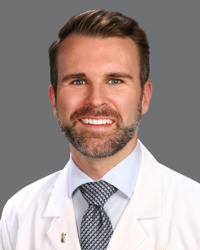
Brian Snelling, MD
Brian Snelling, M.D., is a neurosurgeon, director of cerebrovascular and endovascular neurosurgery and director of the stroke program at Marcus Neuroscience Institute, a part of Baptist Health. Dr. Snelling specializes in treating aneurysms, arteriovenous malformations (AVMs), strokes, tumors and other surgical diseases of the brain and spine. He is fluent in English and conversational in Spanish.
Prior to joining Marcus Neuroscience Institute in 2018, Dr. Snelling completed a neurological surgery residency and an endovascular neurosurgery fellowship at Jackson Memorial Hospital and the University of Miami Miller School of Medicine.
He is an expert in performing catheter-based procedures through the radial artery in the wrist, which improves patient safety and recovery. Dr. Snelling has trained hundreds of surgeons in the procedure. He has also published research and presented on the topic at numerous industry events.
Dr. Snelling’s approach to patient care is to treat each patient like a member of his family and ensure they are fully informed about all of their treatment options.
When he is not treating patients, Dr. Snelling enjoys spending time with his family.

Advanced Brain & Spine Care You Can Trust
Related Stories
View All Articles
Waking Up at 3 a.m.? A Sleep Expert Explains Why It Happens and When to Be Concerned
November 6, 2026
7 min. read

Normal Aging or Something More? Memory Changes You Shouldn't Ignore
November 2, 2026
7 min. read
