
‘Stage 0’ Breast Cancer: When Actively Monitoring DCIS May Be an Option
8 min. read
Baptist Health Cancer Care
For carefully selected patients with low-risk DCIS, active monitoring — closely watching the abnormal cells with regular breast imaging rather than proceeding immediately to surgery — is emerging as an approach being studied in clinical trials. Early findings are prompting new conversations about how to balance the possibility that DCIS could eventually become invasive breast cancer against the potential harms of treating a condition that might never progress.
Experts emphasize, however, that active monitoring is not appropriate for everyone and that long-term evidence is still developing.
“Previously, all DCIS was treated the same and the presumption was that it progressed to invasive cancer,” says Anastasia Tousimis, M.D., breast surgical oncologist, deputy director of Baptist Health Cancer Care, and chief of breast surgery at Baptist Health Cancer Care. “Research has shown that it is not all the same and some low-risk DCIS does not progress.”
What Is DCIS?
DCIS develops when abnormal cells are found inside the milk ducts of the breast, but have not broken through the duct wall into surrounding breast tissue. That distinction is important: DCIS is considered stage 0 breast cancer and is noninvasive.
The challenge is that physicians cannot yet predict with certainty which cases will remain contained and which will eventually become invasive.
“Most cases will not become life-threatening and should not be overtreated,” Dr. Tousimis says. “By identifying low-risk DCIS, we can offer active monitoring and de-escalate care.”
De-escalation means safely reducing the intensity of treatment when evidence suggests that more treatment may not provide additional benefit. It does not mean withholding appropriate care.
Studies comparing active monitoring with standard treatment are helping physicians better understand whether certain low-risk cases can be safely followed. Because follow-up from these trials remains relatively short, active monitoring requires careful patient selection and a detailed discussion of the uncertainties.
“There is no one size that fits all for management of DCIS,” says Youssef Zeidan, M.D., radiation oncologist at Eugene M. & Christine E. Lynn Cancer Institute at Boca Raton Regional Hospital, part of Baptist Health. “Patients are advised to seek care at major referral centers with expert breast cancer specialists.”
Who Might Be Considered Low Risk?
Determining whether active monitoring might be reasonable requires more than simply knowing that a patient has DCIS.
Pathologists examine tissue obtained during a biopsy and evaluate factors including nuclear grade — how abnormal the cells look under a microscope — and hormone-receptor status. Estrogen receptor-positive DCIS, for example, means the abnormal cells have receptors that allow the hormone estrogen to influence their growth.
Physicians also need to confirm that there is no evidence of invasive cancer.
“The pathologic factors we use to stratify risk include nuclear grade, hormone status and the absence of invasive disease,” Dr. Tousimis explains. “The clinical factors include age, whether DCIS was diagnosed on a screening mammogram without evidence of a palpable mass and localized disease.”
Breast imaging adds another important layer of information.
DCIS is rarely discovered because a woman feels a lump. Instead, it is commonly detected on a mammogram because of tiny calcium deposits called microcalcifications.
“Advances in breast imaging techniques have led to an increase in the diagnosis of DCIS,” says Gladys Giron, M.D., a breast surgical oncologist at Baptist Health Miami Cancer Institute. “Imaging can identify patients suitable for active monitoring, including those with one area of DCIS and fatty breast tissue favorable for mammographic monitoring.”
Patients with DCIS involving a relatively large area of the breast or separate areas of disease may not be appropriate candidates for monitoring, Dr. Giron says.
What Does Active Monitoring Actually Involve?
Active monitoring should not be confused with doing nothing.
For a patient who meets low-risk criteria and chooses monitoring, regular breast imaging becomes central to care. The goal is to identify changes that could indicate the DCIS is progressing and intervene when appropriate.
“Typically, the patient will have a mammogram of the breast with DCIS every six months,” Dr. Giron says. “An increase in the number of microcalcifications, new suspicious microcalcifications, or the development of a suspicious mass or distortion would prompt additional testing and discussion of surgical treatment and radiation.”
Additional testing might include more detailed imaging or another biopsy to determine whether the cells have changed or invasive cancer has developed.
Mammography remains the standard imaging test for detecting and following DCIS, but it has limitations. A mammogram can reveal physical changes in the breast; it cannot reliably predict the biological behavior of an individual patient's DCIS.
That uncertainty is one reason surveillance must be maintained consistently.
Why Surgery Is Still an Important Standard
Active monitoring does not mean surgery is becoming unnecessary for DCIS.
For many patients, surgery remains the appropriate treatment. A common operation is lumpectomy, also called breast-conserving surgery, in which the surgeon removes the DCIS and a margin of surrounding tissue while preserving most of the breast.
The evolving question is whether some carefully selected patients need that treatment immediately.
For patients anxious about delaying surgery after hearing the word “cancer,” understanding what DCIS represents can help put the options into perspective.
“It is important as clinicians that we explain to patients that DCIS is not an invasive cancer which would harm them, but contained cancer cells which have not spread,” Dr. Tousimis says. “Most patients are reassured that they will be followed closely and not need an invasive surgery.”
That conversation should also address the possibility that monitoring could eventually reveal changes requiring treatment.
Radiation Therapy Is Becoming More Individualized, Too
The effort to personalize DCIS care extends beyond deciding whether to operate.
After lumpectomy, radiation therapy has traditionally been recommended for many patients to lower the likelihood of DCIS or invasive breast cancer returning in the treated breast. Radiation uses high-energy beams to destroy remaining abnormal cells.
But physicians are increasingly evaluating which patients receive enough benefit from radiation to justify treatment and which may safely avoid it.
“Patients undergoing lumpectomy for DCIS are recommended to have a discussion with an expert radiation oncologist in order to discuss the risk-benefit ratio of adjuvant radiation therapy,” Dr. Zeidan says.
Adjuvant therapy refers to additional treatment given after the primary treatment — in this case, radiation after surgery.
The decision may take into account the size and grade of the DCIS, the patient's age, hormone-receptor status and surgical margins — whether abnormal cells extend to the edge of the tissue removed during surgery. Doctors may also consider whether the patient is willing to take endocrine therapy, medication that blocks or reduces the effects of hormones that can stimulate certain breast cells.
Active Monitoring Could Also Change the Role of Radiation
If a patient chooses active monitoring rather than surgery, radiation generally is not part of the immediate treatment plan. But that does not necessarily mean radiation has been permanently ruled out.
“Early results from randomized trials suggest that a subgroup of patients might be eligible for an active monitoring approach; however, the follow-up remains short,” Dr. Zeidan says. “For patients choosing active monitoring, the decision for radiation therapy is deferred rather than declined forever.”
If monitoring later shows concerning changes and surgery becomes necessary, radiation can again become part of the treatment discussion.
“Radiation therapy is expected to be more selective in the future,” Dr. Zeidan adds.
Imaging Cannot Answer Every Question
Although mammography is essential for surveillance, imaging alone cannot tell physicians exactly how a particular case of DCIS will behave over many years.
“Mammography is the gold standard study for detection and subsequent follow-up or active surveillance of DCIS,” Dr. Giron says. “It cannot predict which patients are more likely to experience progression of DCIS itself or progression to invasive disease.”
Researchers are therefore studying additional ways to distinguish lower-risk from higher-risk DCIS.
These include molecular and genomic tests that analyze characteristics of the abnormal cells to estimate their biological behavior. Such tests may eventually help physicians more precisely determine who benefits from surgery or radiation and who can safely receive less treatment.
Baptist Health Cancer Care is expected to participate in a new clinical trial, which will evaluate whether the “DCISionRT” biosignature test can help guide decisions about radiation therapy for DCIS, according to Dr. Zeidan. DCISionRT is an advanced genomic risk assessment test for patients diagnosed with DCIS.
From a Standard Approach to a Personalized Conversation
The emerging research does not establish active monitoring as the right choice for every patient with DCIS. Instead, it reinforces an increasingly important principle in breast cancer care: The same diagnosis can carry different levels of risk for different patients.
Treatment decisions may involve a breast surgeon, radiation oncologist, medical oncologist, radiologist and pathologist, with each specialist contributing information about the disease and potential benefits and risks of different approaches.
Patients considering active monitoring also need to be comfortable with regular imaging and the possibility that future findings could lead to a biopsy, surgery or other treatment.
“Ongoing surveillance is important in expanding our knowledge so we may more accurately determine which patients can be safely monitored,” Dr. Giron says. “This continued imaging will allow early detection of changes that could indicate worsening of the DCIS.”
As longer-term research becomes available, physicians may be able to identify low-risk DCIS with greater precision. For now, the changing science is expanding the discussion from simply “How should DCIS be treated?” to a more individualized question: How much treatment does this particular patient need?
Visit BaptistHealth.net/Mammo to learn more or schedule mammogram. Eligible women can now schedule a screening mammogram without a provider’s order.
Featured Providers
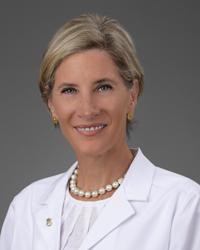
Anastasia Tousimis, MD
Anastasia Tousimis, M.D., MBA, is a breast surgical oncologist and serves as deputy director of Baptist Health Cancer Care, chief of breast surgery at Baptist Health Cancer Care, medical director of the Al and Jane Nahmad Women’s Cancer Center and chief medical liaison of the Memorial Sloan Kettering Cancer Center Alliance.
Dr. Tousimis has been a practicing breast surgeon for more than 20 years and has held numerous leadership roles at esteemed academic medical institutions. She most recently served as director of the Cleveland Clinic Cancer Center at Indian River Hospital in Vero Beach.
An accomplished pioneer in oncology and surgery, Dr. Tousimis is actively involved in clinical research to develop cutting-edge technologies and techniques in the field of breast oncologic surgery. She has authored more than 100 peer-reviewed publications and book chapters and has presented her research at numerous national symposiums. She has received several awards for her clinical, teaching and research expertise.
Dr. Tousimis earned her medical degree at Albany Medical College in New York and a master’s in business administration degree at Massachusetts Institute of Technology. Her post-doctoral training includes a general surgery residency at Guthrie Clinic in Pennsylvania, a breast oncology surgery fellowship at Memorial Sloan Kettering Cancer Center in New York City and a surgical oncology fellowship in minimally invasive techniques at the European Institute of Oncology in Italy.
Working in other countries and learning from various cultures has helped Dr. Tousimis connect with a diverse range of people and build trust that is central to the doctor-patient relationship. Having empathy and responding with compassion are her primary patient care skills, which she says are necessary for providing personalized care that meets her patients’ needs and goals.
During her free time, Dr. Tousimis cherishes spending quality time with her family, and they often enjoy participating in outdoor sports and traveling together.

Youssef Zeidan, MD
Youssef Zeidan, M.D., Ph.D., is an associate professor of radiation oncology at Florida International University and a radiation oncologist at Lynn Cancer Institute, part of Baptist Health. Dr Zeidan previously served as an assistant professor of radiation oncology at the University of Miami. He received his dual M.D./Ph.D. degree from the Medical University of South Carolina. This was followed by four years of residency training in radiation oncology at Stanford University, where he served as chief resident.
Dr. Zeidan has authored more than 60 peer-reviewed publications in the field, focusing on tailored radiotherapy options. He received several grants and awards from the radiological society of North America and the American Society for Radiation Oncology. In recognition of his work, he received the Young Leaders Award from the Union for International Cancer Control. In 2025, he was awarded the VIVLI ambassador award and the Blackman Scholarship. Dr. Zeidan approaches cancer care by taking the time to understand each patient’s social and psychological perspectives. He believes this is key for developing a successful treatment plan.
When he is not treating patients, Dr. Zeidan enjoys spending time with family and friends, attending community events, visiting historical sites and reading.

Gladys Linda Giron, MD
Gladys Giron, M.D., FACS, is a Board-certified, breast surgery fellowship-trained surgeon and chair of the Breast Leadership Program of the Breast Center at Baptist Health Herbert Wertheim Cancer Institute. Previously, she was medical director of the Taylor Breast Health Center at Jackson Memorial Hospital. She earned her medical degree from the University of Miami Miller School of Medicine and completed her surgical residency training at the University of Miami/Jackson Memorial Medical Center. Dr. Giron completed a clinical and research breast surgery fellowship at Memorial Sloan-Kettering Cancer Center and a breast surgery fellowship at Columbia University College of Physicians and Surgeons at St. Luke's-Roosevelt and Beth Israel Medical Centers. She has published several research articles in medical journals and is an assistant clinical professor of surgery at Florida International University’s Herbert Wertheim College of Medicine.

Compassionate, Expert Cancer Care at Baptist Health
Related Stories
View All Articles
After an Abnormal Mammogram: Why Timely Follow-Up Can Be Life-Saving
October 7, 2026
7 min. read

Young Mom on Her Cancer Journey: 'I'm a Breast Cancer Thriver'
October 6, 2026
11 min. read
Video

Breast Cancer Survivorship: What Life After Treatment Really Looks Like
October 5, 2026
36:05