
Grandfather and Avid Golfer Stays Active After Landmark Prostate Cancer Treatment at Baptist Health
9 min. read
Video
Baptist Health Cancer Care
At 76 years old, Pedro Lopez keeps a full schedule. He plays golf several times a week at his club, spends afternoons watching Hallmark movies with his wife. And he roots for the New York Yankees with the same devotion he's held his entire life.
He's a husband of 53 years, a father and a grandfather of four. What he didn't expect to add to that list was becoming the first patient at Baptist Health Herbert Wertheim Cancer Institute to receive a groundbreaking form of prostate cancer treatment that utilizes HIFU, or High Intensity Focused Ultrasound.
Remarkably, Mr. Lopez said he wasn’t shocked when he first heard of his diagnosis. “It didn't bother me too much,” he recalls. “Prostate cancer, I find, is very common among men, especially as you get older.”
Now, he is adamant about relaying his medical journey to motivate other men so they won’t take prostate cancer for granted. "If I had one message to share, it would be to get your screening done right away."
Mr. Lopez’s story offers a reassuring lesson for men everywhere: early detection, paired with advanced care, can turn a frightening diagnosis into a brief detour, rather than a life-altering event.
(Watch video: Hear from patient Pedro Lopez; Manuel Ozambela, Jr., M.D., urologic surgical oncologist at Baptist Health Herbert Wertheim Cancer Institute; and Murugesan Manoharan, M.D., surgical urologic oncologist and the chief of urologic oncology surgery at the Institute.)
A Life Rooted in Miami
Pedro came to Miami from Cuba at age 10 and has called South Florida home ever since. His days follow a comfortable rhythm. He wakes early, makes his own breakfast and heads to the golf course by afternoon. Evenings are for family, television and time with his wife, Miriam.
Golf runs through the family. Pedro introduced each of his grandchildren to the game, taking them to lessons and to the driving range to sharpen their swings. His granddaughter, whom he affectionately calls his princess, and his three grandsons remain a central part of his life.
That active, family-centered lifestyle is exactly what his care team worked to protect when cancer entered the picture.
Caught Early, Before Symptoms Appeared
Mr. Lopez never felt sick. He had no warning signs at all. His prostate cancer was discovered through routine screening ordered by his longtime primary care physician of more than 25 years, who then referred him to Manuel Ozambela, Jr., M.D., a urologic surgical oncologist at Baptist Health Herbert Wertheim Cancer Institute.
This detail matters. Prostate cancer often develops silently, producing no symptoms in its early stages. Regular screening, typically through a simple blood test and follow-up imaging, is frequently the only way to catch it before it spreads.
"He came to me as a referral with a concern for potential prostate cancer," Dr. Ozambela said. "He had some imaging, he had some abnormal markers, and we had to set him up for a biopsy. That's how we made the diagnosis initially."
Understanding the Diagnosis
Mr. Lopez was diagnosed with localized intermediate-risk prostate cancer. Here's what that means in plain terms:
- Localized indicates the cancer was contained within the prostate and had not spread to other parts of the body.
- Intermediate-risk describes how likely the cancer is to grow or spread. It sits between low-risk (slow-growing) and high-risk (more aggressive), guiding how urgently and aggressively it should be treated.
Reaching that diagnosis required several advanced tools working together:
- MRI: A detailed scan that produced images of Mr. Lopez’s prostate. It revealed two small suspicious areas on one side of the gland.
- Fusion biopsy: A precise biopsy technique that merges MRI images with real-time ultrasound. This lets the physician target the exact suspicious spots rather than sampling the prostate blindly, improving accuracy.
- PSMA PET scan: A specialized imaging test, sometimes called molecular imaging. It highlights prostate cancer cells specifically, showing both the location and the activity of the disease.
All three tests pointed to the same conclusion. Pedro's cancer was confined to one small spot, while the rest of his prostate was healthy. That finding opened the door to a highly targeted treatment.

Confronting Fear as a Family
For Miriam Lopez, Pedro’s wife, proud Baptist Health Doctors Hospital Board Member and longtime Baptist Health Foundation donor, the word "cancer" carried heavy weight. Her mother died of pancreatic cancer, and that history filled her with dread when she walked into Dr. Ozambela's office.
"There's a correlation between cancer and fear," she said. "So, I walked into Dr. Ozambela's office very fearful."
What changed her outlook was the physician himself. Miriam described Dr. Ozambela as more than a skilled physician with excellent credentials. She called him an extraordinary human being who explained everything in a way that was easy to understand.
"I had like 102 questions. He answered every single one of them, slowly," she said. "'It's going to be fine.' Reassuring me. That you don't get with every physician that you see."
Dr. Ozambela sees that kind of support as essential to recovery. "We know in general that when patients have great support, they do better," he said. "Miriam is a big part of that." His advice to caregivers is direct: be present, come with questions and stay actively involved, because patients are often too nervous to absorb everything on their own.

A First-of-Its-Kind Treatment
Because Mr. Lopez's cancer was confined to a single, clearly identified area, he qualified for a treatment called focal therapy.
Most prostate cancer treatments address the entire gland, either by removing it through surgery or treating all of it with radiation. Those approaches can carry side effects that affect urinary control and sexual health. Focal therapy takes a different path.
"Instead of treating the entire gland, if we could identify the area that has the disease and focus treatment solely on that area, we're able to avoid some of that collateral damage and improve the patient's quality of life," Dr. Ozambela explained.
The specific method Mr. Lopez received is called HIFU, short for High Intensity Focused Ultrasound. HIFU delivers concentrated ultrasound waves that generate heat to destroy targeted prostate tissue. No incision is required.
What made Pedro's case historic was the technology guiding the procedure. He became the first patient ever to undergo PSMA (Prostate-Specific Membrane Antigen) fusion-guided HIFU for prostate cancer. By combining the pinpoint accuracy of the PSMA PET scan with HIFU, and supporting the treatment plan with artificial intelligence (AI), the care team could target the cancer with remarkable precision while sparing healthy tissue.
Mr. Lopez's response to the recommendation was characteristically direct. "I've heard that you do a very robotic procedure, high intensity focused ultrasound," he recalled telling his physician. "He said, 'Yeah, I would recommend that.' Well, let's do it. Where do I sign up?"
Another Vital Component: Artificial Intelligence
There was another vital component to Mr. Lopez’s treatment – the artificial intelligence (AI) that drives HIFU, according to Murugesan Manoharan, M.D., surgical urologic oncologist and the chief of urologic oncology surgery at Baptist Health Herbert Wertheim Cancer Institute and Abbhi Family Endowed Chair in Urologic Oncology.
“HIFU allows us to destroy or blade the cancer tissue without affecting the nearby tissues,” explains Dr. Manoharan. “The PSMA PET scan is a special scan which identifies the cancer within the prostate, and also tells me whether there's a cancer outside the prostate or not. To put these things together, we use artificial intelligence, which gives us a precision and accuracy in treating these cells without destroying the normal cells.”
With the help of these advancements, patients can resume their quality of living, he adds. “And they can return to their activities very quickly. At the same time, we’re able to cure the cancer completely.”
A Smooth Recovery
The Lopez family braced for a difficult recovery. Pedro's earlier biopsy had been hard on him, so they expected the same afterward. The reality was far easier.
After the procedure, Mr. Lopez needed a catheter, a thin tube that drains urine from the bladder, for about seven days. Ever the engineer at heart, he even designed a discreet bag to carry it comfortably. The catheter was the only part of the experience he disliked, and it caused no pain.
"After seven days, we came back and he was done — it's all over," Miriam Lopez said. Within a few weeks, the couple took a trip together. Mr. Lopez summed up his recovery simply: "It took me about a week and a half, and then I was almost at 100 percent."
Today, Dr. Ozambela reports that Mr. Lopez is thriving. "He's got excellent urinary control, no urinary issues. He's essentially the same as he was before treatment," he said, adding that the couple now has trips planned to Poland and Spain.
“When we treat a patient with prostate cancer, there are three goals,” said Dr. Manoharan. “One is cure the cancer. Secondly, improve the quality of life —and let the patient return to the normal activity as soon as possible.”
Grateful for the extraordinary care they received, the Lopez family made a donation to Baptist Health Foundation in honor of Dr. Ozambela. Their gift will support patient care, innovation and research at Wertheim Cancer Institute.
The Right Treatment for the Right Patient
Dr. Ozambela stresses that HIFU isn't for everyone. Patients with cancer in multiple areas of the prostate, for example, need different care.
"We don't have to make the patient fit the treatment. We pick the right treatment for the right patient," he said. That philosophy relies on offering a full range of options and tailoring recommendations to each person's cancer and personal goals.
Artificial intelligence is expanding what's possible. Dr. Ozambela sees it improving prostate cancer care in three ways: helping identify which patients will benefit most from focal therapy, sharpening treatment planning by analyzing imaging more thoroughly, and guiding follow-up by flagging patients at higher risk of recurrence.
"At Baptist Health Cancer Care, the way we're treating prostate cancer today is highly individualized and highly innovative," Dr. Ozambela said.
Dr. Manoharan emphasizes Mr. Lopez’s reminder of not putting off screenings. “The one message I want to give is — please, do get tested. If you get tested, you can identify the disease early and you can treat it effectively.”
Pedro Lopez's Message to Other Men
Mr. Lopez’s experience left him with one clear piece of advice for men. "It doesn't go away by itself," he said. "Get your screening done right away."
For Miriam Lopez, the journey deepened an already strong marriage. "It makes you treasure the time that you have," she said. "It makes you want to live every minute in the best possible way."
Featured Providers
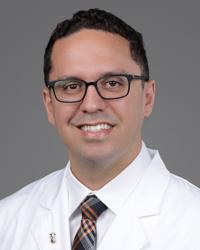
Manuel Ozambela, MD
Manuel Ozambela, Jr., M.D., is a urologic surgical oncologist at Baptist Health Herbert Wertheim Cancer Institute. He specializes in the treatment of cancers that arise from the genitourinary system (urinary and reproductive systems), including kidney, bladder, prostate, testicular and penile cancers. He is fluent in English and Spanish. After earning his medical degree from Harvard Medical School, Dr. Ozambela completed his urologic surgery training at Brigham and Women’s Hospital in the Harvard Program in Urology. He received both the Exceptional Resident Award and the Award in Academic Excellence for his outstanding clinical performance and academic achievements. Prior to joining Baptist Health, Dr. Ozambela completed his fellowship in urologic oncology at the University of Texas MD Anderson Cancer Center. During the fellowship, he worked with a multidisciplinary group of investigators to study rare and aggressive kidney tumors with the goal of identifying novel treatment options. He has authored multiple scientific abstracts, manuscripts and book chapters on various topics in urologic oncology. Through his research, he strives to identify new diagnostic and treatment options for genitourinary cancers, improve patient recovery after surgery and enhance his patients’ quality of life.Understanding that he often meets patients during significantly stressful moments, Dr. Ozambela takes time to talk through diagnoses and treatment options. Through excellent communication and shared decision-making, he works with his patients to create treatment plans that reflect their individual goals. Dr. Ozambela is a South Florida native and enjoys spending time with his growing family when not taking care of patients.

Murugesan Manoharan, MD
Murugesan Manoharan, M.D., FRACS, is a surgical urologic oncologist and the chief of urologic oncology surgery at Herbert Wertheim Cancer Institute. Dr. Manoharan specializes in the treatment of genitourinary cancers, including bladder, kidney, prostate and testicular cancer.
Dr. Manoharan also serves as the chairman of the Department of Urology at Baptist Health South Florida and a professor of urology at Herbert Wertheim College of Medicine, Florida International University.
In 2022, the Abbhi Family Endowed Chair in Urologic Oncology was created to help Dr. Manoharan and the Institute conduct research and clinical trials to improve survival rates and quality of life for patients with bladder cancer.
He joined Wertheim Cancer Institute from the Sylvester Comprehensive Cancer Center, where he served as one of the site disease group leaders for genitourinary cancers. He also practiced urology at Jackson Memorial Hospital and the Veterans Affairs Medical Center in Miami.
Dr. Manoharan is a renowned leader in the treatment of prostate cancer, kidney cancer, bladder cancer and other urologic malignancies. He is an expert in minimally invasive surgery, including nerve sparing robotic prostatectomy, robotic kidney surgery, robotic bladder removal and neobladder reconstruction. Dr. Manoharan was one of the first urologists in the United States to perform robotic bladder removal surgery and reconstruction of neobladder using a Pfannenstiel incision.
He also specializes in other minimally invasive ablative cancer procedures, such as high-intensity focused ultrasound (HIFU) therapy, cryotherapy and the NanoKnife procedure to treat prostate cancer.
He has extensive experience training medical students, residents and oncology fellows. He has won numerous awards for his teaching and clinical excellence, as well as his research work.
Dr. Manoharan’s research interests include stem cell applications, biomarkers and cancer outcomes. He serves as an editorial reviewer for several scientific publications. He is also widely published in peer-reviewed medical journals and is an invited speaker at national and international scientific symposiums.
Dr. Manoharan has authored more than 140 scientific articles and 15 textbook chapters and has presented papers and posters at more than 100 national and international meetings. He served as vice chairman and a member of the International Bladder Cancer Guidelines committee, organized by the WHO and Société Internationale d'Urologie.When he is not treating patients, Dr. Manoharan enjoys music and traveling.

Compassionate, Expert Cancer Care at Baptist Health
Related Stories
View All Articles
Young Mom on Her Cancer Journey: 'I'm a Breast Cancer Thriver'
October 6, 2026
11 min. read
Video

Ten Years Later, This Breast Cancer Survivor is Embracing Life—and Her New Grandson
October 1, 2026
7 min. read
Video

From Stage 4 Prostate Cancer to Marathon Finish Line: Mario’s Journey of Faith and Perseverance
September 30, 2026
7 min. read