
Five Things Cardiologists Wish You'd Start Doing in Your 30s
4 min. read
Baptist Health Heart & Vascular Care
Cardiovascular experts say that’s exactly why your 30s matter.
Heart disease develops over years, often without warning signs. High blood pressure and unhealthy cholesterol can quietly damage arteries long before a heart attack or stroke occurs.
Cardiologists with Baptist Health Heart & Vascular Care are seeing hypertension in patients as young as their late 20s and 30s, while newer cholesterol guidelines increasingly emphasize identifying and treating risk earlier.
Why Heart Prevention Starts Earlier Than You Think
“If you want your heart to take care of you later in life, now is the time to start taking care of your heart,” says cardiothoracic surgeon Tom C. Nguyen, M.D., system chief executive of Baptist Health Heart & Vascular Care and chief medical executive of Baptist Health Miami Cardiac & Vascular Institute.
Dr. Nguyen also serves as director of minimally invasive surgery and the Barry T. Katzen Endowed Chair at Miami Cardiac & Vascular Institute and chair and professor of the Department of Cardiovascular Sciences at Florida International University Herbert Wertheim College of Medicine.
Sanjeev Kumar Gulati, M.D., executive deputy director and system chief of cardiovascular medicine at Baptist Health Heart & Vascular Care, says many of the biggest threats to one’s heart health are lifestyle factors that people can modify on their own.
“The three big risk factors, which have not changed since 1990, are high blood pressure, dietary risk and high cholesterol—especially LDL (low-density lipoprotein), which can contribute to plaque buildup in the arteries, raising the risk of heart attack and stroke,” Dr. Gulati says.\
Five Steps to a Healthier Heart
Both physicians say that making the effort to take care of your heart health in your 30s can pay dividends later in life.
Here are five things they say you can start doing today to help maintain a healthy heart for decades to come:
1. Know Your Numbers—Even If You Feel Fine
Start by knowing your blood pressure, cholesterol and blood sugar. You don’t need symptoms to have cardiovascular risk factors, Dr. Nguyen says. High blood pressure and high LDL, or “bad,” cholesterol frequently cause no obvious warning signs.
That makes routine preventive care particularly important in your 30s, he says. Talk with your healthcare provider about your:
• Blood pressure
• Cholesterol, including LDL
• Blood sugar
• Weight and other individual risk factors
• Family history of premature heart disease
Newer cardiovascular risk tools can estimate both 10- and 30-year risk beginning at age 30, reinforcing the move toward earlier prevention rather than waiting until disease appears.
2. Make Movement Part of Your Normal Week
Sitting for much of the day can raise cardiovascular risk. Regular movement helps counter it, Dr. Gulati says.
“Physical inactivity contributes to cardiovascular risk. Conversely, regular exercise can help improve blood pressure, cholesterol, weight and blood-sugar control.”
Adults should aim for at least 150 minutes of moderate-intensity aerobic activity each week, with muscle-strengthening activities on two or more days, Dr. Gulati advises. But, he adds, “you don’t have to become an endurance athlete overnight.”
“Brisk walks, cycling, swimming and other activities you enjoy all count,” he says. “The important part is creating a habit you can maintain for decades, not a workout plan you abandon after a month.”
3. Eat for the Heart You Want at 60
“Healthy eating doesn’t require following an extreme diet,” Dr. Nguyen says. “Think less about finding the ‘perfect’ diet and more about what fills your grocery cart week after week.”
A diet rich in vegetables, whole grains, lean proteins, fruits, and healthy fats helps protect against heart disease, he says.
According to the American Heart Association, a heart-healthy approach to eating emphasizes:
• Whole, minimally processed foods
• Limiting sugary drinks, excess sodium and heavily processed foods
• Healthy fats from foods such as olive oil, nuts and avocados
• Fiber-rich foods such as oats, beans, lentils, fruits and vegetables
4. Protect Your Sleep—and Pay Attention to Stress
Sleep is easy to sacrifice in your 30s, but your heart notices, both Dr. Nguyen and Dr. Gulati say. Adults generally should aim for seven to nine hours of sleep a night.
Poor or fragmented sleep can affect blood-pressure regulation, and chronic sleep deprivation has been associated with high blood pressure, inflammation and weight gain.
Chronic stress also can affect cardiovascular health, according to Dr. Nguyen.
“Exercise, adequate sleep, time away from screens, relaxation techniques and seeking professional help when needed can all be part of a healthier stress-management strategy,” he says.
5. Don’t Wait for a Wake-Up Call
Perhaps the biggest mistake is assuming prevention can wait because you feel healthy.
The effects of elevated blood pressure, cholesterol, blood sugar, excess weight, smoking and other risk factors accumulate over time.
Recent research highlighted by Dr. Gulati found that nearly nine out of 10 ischemic heart disease deaths were associated with modifiable risk factors. That makes your 30s an opportunity rather than a reason for complacency, he says.
“Instead of trying to overhaul your life at once, choose one sustainable change: schedule your physical, learn your cholesterol numbers, walk after dinner, cook one additional meal at home each week or establish a consistent bedtime,” advises Dr. Gulati.
Click here to learn more about the treatments and specialists available at Baptist Health Heart & Vascular Care.
Featured Providers
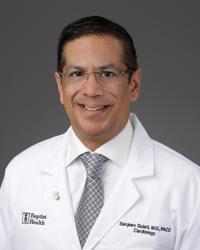
Sanjeev Kumar Gulati, MD
Sanjeev Kumar Gulati, M.D., FACC, is the executive deputy director of Baptist Health Heart & Vascular Care and the system chief of cardiovascular medicine. Dr. Gulati specializes in advanced heart failure, heart transplantation, mechanical circulatory support and complex cardiovascular disease management.
Dr. Gulati earned his medical degree from the University of Pennsylvania after graduating summa cum laude from George Washington University with a bachelor’s degree in electrical engineering. He completed his internal medicine residency at Johns Hopkins Hospital, were he also completed fellowships in cardiology and advanced heart failure and transplant cardiology. Dr. Gulati is board-certified in advanced heart failure and transplant cardiology.
Prior to joining Baptist Health, Dr. Gulati served as chief of adult cardiology at Sanger Heart & Vascular Institute, part of Advocate Health. During his leadership tenure, he helped transform the cardiovascular program into a nationally recognized center for advanced cardiovascular care, overseeing the development of specialty programs in advanced heart failure, transplantation, ventricular assist devices, cardio-oncology and virtual cardiovascular care.
Grounded in a commitment to compassionate, patient-centric care, Dr. Gulati believes in a close collaboration among physicians, patients and families to deliver clinical excellence. He is dedicated to developing highly individualized treatment plans, empowering patients to navigate complex cardiovascular conditions through clinical education, collaborative advocacy and ongoing support.
Outside of work, Dr. Gulati enjoys exploring new cultural destinations, spending quality time with family and learning how to play golf.
Dr. Gulati is fluent in English. He sees patients at 8950 North Kendall Dr., Suite 507W, Miami, FL 33176.

Tom C Nguyen, MD
Dr. Nguyen is an internationally recognized minimally invasive heart surgeon and believes that small incisions make a big difference. He is the System chief executive of Baptist Health Heart & Vascular Care and chief medical executive of Baptist Health Miami Cardiac & Vascular Institute, as well as director of minimally invasive surgery and the Barry T. Katzen Endowed Chair at Baptist Health Miami Cardiac & Vascular Institute and chair and professor of the Department of Cardiovascular Sciences at Florida International University Herbert Wertheim College of Medicine. In his role as Chief Medical Executive, he leads cardiac surgery, cardiology, vascular surgery, and interventional radiology for the 12-hospital health network.
His outcomes score in the top 98.7% in the national Society of Thoracic Surgeons’ (STS) database. Dr. Nguyen recently came from the University of California San Francisco (UCSF), where he was the chief of cardiothoracic surgery and Charles Schwab Distinguished Professor. During his tenure at UCSF, Dr. Nguyen helped transform cardiothoracic surgery, while establishing benchmark figures in quality, outcomes and research.
Dr. Nguyen graduated from Rice University and then worked in Switzerland at the World Health Organization. Although he was awarded a Fulbright Scholarship, he decided to pursue medicine at Johns Hopkins School of Medicine. He says that there’s much poetry and music written about the heart, but that when he witnessed the panache of a heartbeat, he was hooked; therefore, he has dedicated the past 30 years to becoming the best heart doctor he can be. Dr. Nguyen completed his surgery training at Stanford, where he received the Outstanding ICU award and the Intern of the Year Award. He then completed a fellowship in cardiothoracic surgery at Columbia University as well as a transcatheter aortic valve replacement (TAVR) fellowship at Emory. During this time, he was the President of the Thoracic Surgery Resident’s Association (TSRA).
Thanks to his passion for teaching and mentorship, Dr. Nguyen received the Benjy Brooks Outstanding Clinical Faculty Award, as well as teaching awards from the Arnold P. Gold Foundation and the American College of Surgeons. He has volunteered as a surgeon across the globe and lived in Africa (Asmara, Eritrea) to share experiences with others.
Dr. Nguyen is active in research at a regional, national, and international level. He has published nearly 300 peer-reviewed articles, serves on the editorial boards of four academic journals and is the editor of several textbooks. Before turning 40, he received the Houston Business Journal’s 40 Under 40 Award. Dr. Nguyen leads research trials on treatments for valve disease. He has been principal investigator on landmark trials exploring transcatheter technologies. He recently served as president of the 21st Century Cardiothoracic Surgery Society and is a director of the American Board of Thoracic Surgery (ABTS). He also serves on the Board of Directors for the Society of Thoracic Surgeons (STS), the Thoracic Surgery Foundation (TSF), CTSNet, and the International Society for Minimally Invasive Cardiothoracic Surgery (ISMICS).
As an immigrant growing up in America, Dr. Nguyen learned more than English by watching Saturday morning cartoons. He learned about dreams, mentorship, and serendipity. He appreciates that healthcare revolves not around models and formulas, but around people. He also appreciates that his success is not his own, but reflections from countless mentors and fortuitous events. Recognizing his good fortune, he vows to pay it forward. He strives every day to deserve the privilege of practicing medicine and is committed to treating patients like family.
Dr. Nguyen is married to Dr. Gina Landinez, an interventional radiologist, and is the proud dad of two beautiful daughters.

Expert Heart & Vascular Care for Every Heartbeat
Related Stories
View All Articles
From Triple Bypass to Full Speed: One Patient's Seamless Road to Recovery
September 29, 2026
10 min. read
Video

Peripheral Arterial Disease (PAD): Eight Early Warning Signs to Watch For
September 28, 2026
8 min. read
