
Dystonia: Neurological Disorder Often Mistaken for Stress or Anxiety
6 min. read
Baptist Health Brain & Spine Care
A neck that suddenly pulls to one side. Eyelids that repeatedly clamp shut. A hand that curls or cramps while writing. A voice that becomes strained or difficult to control.
These symptoms can be puzzling — and when they fluctuate or become more noticeable during stressful situations, they may initially be attributed to anxiety, tension or emotional stress. But for some people, the underlying problem is dystonia, a neurological movement disorder that causes involuntary muscle contractions and abnormal movements or postures.
September is Dystonia Awareness Month, an annual effort to increase understanding of a disorder that remains frequently misdiagnosed. The Dystonia Medical Research Foundation (DMRF) reports that as many as 70 percent of patients are misdiagnosed before receiving a dystonia diagnosis.
“Dystonia can be difficult to recognize because there isn’t one single way that it looks,” says Nestor Beltre, M.D., neurologist and movement disorders specialist at Baptist Health Miami Neuroscience Institute. “Symptoms can involve different parts of the body, may come and go, and can sometimes become more apparent when a person is under stress. That variability can contribute to delays in diagnosis.”
What Is Dystonia?
Dystonia is a neurological movement disorder in which involuntary muscle contractions cause twisting or repetitive movements, abnormal postures or both. It may occur on its own or in association with another neurological condition.
The condition can affect a single body region, several neighboring areas or much of the body. For example, cervical dystonia affects muscles in the neck and can cause the head to turn, tilt or pull involuntarily. Blepharospasm causes involuntary eyelid closure. Other forms can affect the jaw, face, vocal cords, arms, hands, legs or trunk.
“People sometimes describe a pulling, twisting or cramping sensation that they simply can’t control,” says Sarah E. Marmol, M.D., neurologist at Baptist Health Miami Neuroscience Institute who specializes in movement disorders such as Parkinson’s disease, tremor and dystonia. “In other patients, what stands out is an abnormal posture or a repetitive movement that occurs during a particular activity.”
The range of symptoms helps explain why dystonia can be confused with other conditions. Depending on how it presents, symptoms may resemble muscle strain, tremor, orthopedic problems, eye disorders or stress-related muscle tension.
Why Stress Can Confuse the Picture
One of the biggest misconceptions about dystonia is the relationship between symptoms and stress.
Stress does not mean that dystonia is “all in someone’s head.” Emotional or physical stress can make symptoms of many neurological disorders more noticeable. A person with tremor, for example, may shake more when nervous. Similarly, someone with dystonia may experience increased muscle contractions during periods of stress, fatigue or heightened activity.
“Stress can amplify a movement disorder without being its underlying cause,” Dr. Beltre explains. “That distinction is important. If an involuntary movement repeatedly occurs, persists or begins interfering with everyday activities, it deserves a neurological evaluation rather than simply being assumed to be anxiety.”
That is especially important when symptoms become chronic or follow a recognizable pattern.
“Patients may notice that a symptom is worse when they are tired, anxious or concentrating on a specific task, and that observation is useful,” Dr. Marmol says. “But the fact that stress changes a symptom does not, by itself, tell us what is causing it. We look carefully at the movement itself and the circumstances in which it occurs.”
Dystonia Can Be Surprisingly Specific
Some dystonias appear primarily during a particular activity. A musician, for example, might develop involuntary hand or finger movements only while playing an instrument. A writer may experience abnormal hand or wrist contractions while writing.
Other people discover that touching a particular area temporarily improves the abnormal posture or movement — a phenomenon movement disorder specialists recognize as a sensory trick, or geste antagoniste.
These unusual features can make dystonia particularly frustrating for patients who know something is wrong but have difficulty reproducing the symptom during a routine medical visit.
For that reason, videos recorded on a smartphone may sometimes provide useful information for a physician, particularly when symptoms are intermittent.
How Dystonia Is Diagnosed
There is no single blood test or scan that diagnoses every case of dystonia. Diagnosis generally begins with a detailed medical history and neurological examination, including careful observation of the abnormal movement.
A neurologist may evaluate when symptoms started, which muscles are involved, whether certain activities trigger the movement and whether medications or other medical conditions could be contributing.
Depending on the circumstances, additional testing — such as blood tests, genetic testing or brain imaging — may be recommended to look for an underlying cause or rule out another condition.
“Movement disorders are diagnosed in large part by recognizing patterns,” Dr. Marmol says. “A specialist is looking not only at which body part moves, but how it moves, when the movement appears and whether there are other neurological findings that help clarify the diagnosis.”
For unexplained or persistent abnormal movements, evaluation by a neurologist with specialized training in movement disorders can be particularly helpful.
Treatment Is Tailored to the Patient
There is currently no cure for dystonia, but treatments can reduce symptoms and improve function and quality of life. Options can include oral medications, physical or occupational therapy, botulinum toxin injections and, in selected cases, surgery such as deep brain stimulation.
Treatment depends heavily on the type of dystonia and the muscles involved.
Botulinum toxin injections are commonly used for focal dystonias involving overactive muscles. The medication temporarily reduces excessive muscle activity. Dr. Beltre, whose subspecialty expertise includes ultrasound-guided botulinum toxin injections, notes that accurately identifying the affected muscles is important to treatment.
“The goal is not simply to weaken a muscle,” Dr. Beltre says. “We want to identify the muscles producing the unwanted movement and treat them as precisely as possible, while preserving the function the patient needs for everyday life.”
For certain patients whose symptoms remain disabling despite other therapies, deep brain stimulation may be considered. DBS uses an implanted device to deliver electrical stimulation to areas of the brain involved in movement control.
Baptist Health Miami Neuroscience Institute provides multidisciplinary care for movement disorders, with specialists trained in diagnosis, medical management, advanced therapies and rehabilitation.
When Should You See a Doctor?
An occasional muscle twitch or cramp is common and usually does not indicate dystonia. But persistent, repetitive or unexplained movements deserve medical attention, particularly when they begin affecting work, walking, driving, speaking, reading or other daily activities.
Possible warning signs include a neck that repeatedly turns or tilts without intention; frequent involuntary blinking or eyelid closure; recurring hand or foot cramping during specific activities; unusual twisting movements; abnormal postures; or muscle contractions that become painful.
A primary care physician can begin the evaluation and, when appropriate, refer the patient to a neurologist or movement disorders specialist.
“People shouldn’t assume that every unusual movement is dystonia, because there are many possible causes,” Dr. Marmol says. “But if a movement is persistent, involuntary or interfering with your life, it is reasonable to have it evaluated.”
Awareness Can Shorten the Road to Diagnosis
Dystonia affects an estimated 250,000 to 300,000 people in the United States, although the true number may be higher because of underdiagnosis and misdiagnosis. That makes awareness important not only for patients, but also for families and healthcare professionals.
For people who have spent months or years trying to explain an unusual movement, simply recognizing dystonia as a possibility can be an important step.
“The earlier we accurately identify what type of movement disorder a patient has, the sooner we can discuss treatments that may help,” Dr. Beltre says. “Patients often arrive wanting an explanation for something that has been disrupting their lives. Giving that symptom a name and developing a treatment plan can make a meaningful difference.”
Featured Providers
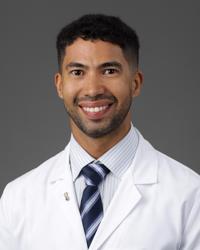
Nestor Guarionex Beltre, MD
Nestor Beltre, M.D., is a board-certified neurologist at Baptist Health Miami Neuroscience Institute. He provides comprehensive, evidence-based care to improve quality of life for patients with complex neurological conditions. He specializes in movement disorders, including Parkinson's disease, tremor, dystonia, Huntington's disease and tic disorders. His subspecialty expertise includes the use of ultrasound-guided botulinum toxin injections for movement disorders and deep brain stimulation programming for Parkinson’s disease and essential tremor.
Dr. Beltre earned his medical degree at the University of Miami Miller School of Medicine. He remained at the University of Miami to complete an internal medicine internship and serve as chief during his neurology residency at Jackson Health System. His clinical training also includes a fellowship at NYU Langone’s Fresco Institute for Parkinson’s and Movement Disorders, where he received advanced training in the diagnosis and management of Parkinson’s disease, dystonia, tremor and tic disorders.
Committed to training and mentoring the next generation of clinicians, Dr. Beltre serves as an assistant professor at the Herbert Wertheim College of Medicine at Florida International University. He has developed educational programs for neurology trainees and presented his work at leading national and international conferences, including the International Congress of Parkinson’s Disease and Movement Disorders and the American Academy of Neurology annual meetings.
Trust, transparency and partnership are the cornerstones of Dr. Beltre’s patient care philosophy. He strives to create a collaborative relationship where medical decisions are guided by both clinical expertise and the patient’s individual values and goals. He takes time to listen, educate and communicate with his patients so they feel supported, respected and empowered to be actively involved in their health journey.
Dr. Beltre is fluent in English and Spanish. He is a coffee enthusiast and an avid reader of history. During his free time, he enjoys road cycling and watching the annual Tour de France races.

Sarah Elizabeth Marmol, MD
Sarah E. Marmol, M.D., is a board-certified neurologist at Baptist Health Miami Neuroscience Institute. She specializes in movement disorders such as Parkinson’s disease, tremor and dystonia, and has a special interest in clinical research.
Prior to joining Baptist Health, Dr. Marmol was a clinical instructor of neurology at the University of Miami Miller School of Medicine.
Dr. Marmol earned her medical degree at the University of Miami Miller School of Medicine. She also completed a neurology residency and a movement disorders fellowship at University of Miami Health System.
Dr. Marmol is certified by the American Board of Psychiatry & Neurology. She is a member of the American Academy of Neurology and the International Parkinson and Movement Disorder Society. She has published her research findings in peer-reviewed journals and presented scientific papers at professional symposiums.
Dr. Marmol views the patient-physician relationship as a care partnership. Her goal is to provide the best care for her patients through high-quality research, evidence-based practice and a holistic approach.
Dr. Marmol is fluent in English and Spanish. When she is not treating patients, she enjoys traveling and exercising.


