
Diagnosed with Aggressive Breast Cancer at 33, She has a Vital Message for Young Women
10 min. read
Baptist Health Cancer Care
Then, while sitting on the couch with her husband, Andrew, Ms. Morales happened to feel a hard lump in her right breast. It was about the size of a quarter. Within weeks, she would learn that she had stage 3 invasive ductal carcinoma, a form of breast cancer that begins in the milk ducts and has spread into surrounding lymph nodes. Her cancer was estrogen receptor-positive and progesterone receptor-positive — but HER2-negative.
“I remember running to the garage and showing my husband, handing him my phone and then just falling to the kitchen floor, thinking this wasn’t happening,” Ms. Morales recalls after seeing the initial imaging report after her mammogram and breast ultrasound, which described the findings as a “highly suspicious malignancy.”

Jessica Morales: “My biggest takeaway is cancer does not discriminate. It doesn’t matter what race you are, how old you are, [if] you’re a mom, you breastfeed, you’re pregnant … It does not matter.”
Like a ‘Blackout Moment’
Then came the diagnosis following a biopsy. “We actually, officially, found out from the radiologist on November 6. She called and said that: ‘Yes, your three sites are all cancerous.’ It was … like a blackout moment.”
What followed was an intensive course of treatment by Kerry-Ann McDonald, M.D., breast surgical oncologist with Eugene M. & Christine E. Lynn Cancer Institute at Boca Raton Regional Hospital, part of Baptist Health; Zdenka Ena Segota, M.D., hematologist oncologist with the Lynn Cancer Institute; and Youssef Zeidan, M.D., radiation oncologist with Lynn Cancer Institute.
Ms. Morales underwent 16 rounds of chemotherapy, followed by a double mastectomy and removal of lymph nodes under her arm after cancer was found in four lymph nodes. She then completed 15 radiation treatments.
Although that phase of active treatment is now behind her, her care continues with endocrine, or hormone-blocking, therapy and other medications intended to reduce the risk of the cancer returning. She is also preparing for breast reconstruction.
“Even though you’re out of active treatment, it doesn’t end,” Ms. Morales says. “I still have the medications. I still have to have reconstruction surgery.”
A Message for Younger Women
Ms. Moralez stresses that her experience underscores an important message for younger women: Breast cancer is less common in women in their 30s, but younger age should not be a reason to dismiss a new breast lump or other change. It is also important for women to understand their personal risk well before the age when routine mammograms generally begin.
“Young women should know that you don't need to be afraid of breast cancer, but you do need to know your risk,” says Dr. McDonald. “Your 30s is the perfect time to understand your family history, determine with your doctor whether you are at increased risk, and plan for when screening should begin.”
Ms. Morales had a family connection to breast cancer. Her grandmother had been diagnosed in her 80s, and Morales had previously discussed that history with her OB-GYN. She had asked whether she should begin screening earlier than usual, and had been told she could consider starting at age 35. She never made it to that milestone.
A Lump She Didn't Expect to Be Cancer
Ms. Morales wasn't undergoing routine breast cancer screening when she discovered something unusual —the lump she felt while sitting on the couch.
Her first reaction was not alarm. She had undergone a breast lift in 2023 and thought there could be another explanation. “I was like: It’s scar tissue. It’s something else. It’s something benign. It’s a cyst. It’s not going to be breast cancer,” she recalls.
Her husband urged her not to dismiss it and to see a doctor. Ms. Morales called and was able to get an appointment two days later. A diagnostic mammogram and ultrasound followed. A biopsy ultimately confirmed cancer at three sites.
For Dr. McDonald, Ms. Morales' experience illustrates why younger women shouldn't dismiss a breast change simply because cancer seems unlikely at their age.
“I would emphasize that younger women should pay attention to change, not try to diagnose themselves,” Dr. McDonald says. “I think it’s important not to wait weeks or months hoping a new lump will disappear. If you feel something in the breast that was not there before, don’t panic, but don’t ignore it. Get it evaluated.”
Knowing Your Risk Before Routine Screening Begins
For women at average risk, routine breast cancer screening generally doesn't begin in their 30s. That makes an important distinction in Ms. Morales' story: She did not need a routine screening mammogram to investigate the lump she found. A new lump or other concerning breast change is a symptom that warrants medical evaluation, regardless of age.
At the same time, family history, genetic factors and other circumstances can put some women at higher risk and lead physicians to recommend an earlier or different screening plan.
“Being younger than the routine screening age doesn't mean you should ignore breast health, but it means your screening should be personalized to your individual risk,” Dr. McDonald says.
Ms. Morales' genetic testing did not identify an inherited mutation associated with her breast cancer. Still, her experience has changed the message she gives other women about knowing their bodies and speaking with their physicians about risk.
“My biggest takeaway is cancer does not discriminate,” she says. “It doesn’t matter what race you are, how old you are, [if] you’re a mom, you breastfeed, you’re pregnant … It does not matter.”
Dr. McDonald similarly emphasizes awareness of changes.
“I think it’s important to know what is normal for you, perform monthly self-breast examinations, and be familiar enough with your breasts to recognize when something has changed,” Dr. McDonald says. “If something is new and doesn’t feel right, don’t let your age reassure you into ignoring it.”
Finding a Team She Trusted
After her diagnosis, she and her husband found themselves trying to navigate pathology reports, medical records and decisions about what should happen next. Through a family connection, she obtained a second opinion with Dr. McDonald. They met on Nov. 14.
“The difference was immediate,” Ms. Morales recalls. “She was warm and she was kind, but she also was incredibly proactive.” She says Dr. McDonald reviewed her records and began seeking information that she and her husband had been trying to obtain.
“After weeks of feeling [like] Andrew and I were managing everything ourselves, suddenly we felt like, ‘Okay, she’s carrying us now, and she has us,’ ” she says. “And that was the moment that just stuck.”
Soon afterward, Ms. Morales was seen through a multidisciplinary clinic, bringing together specialists involved in different aspects of her breast cancer treatment.
“For a young woman like Jessica, I would argue that the relationship with her care team is part of the treatment, not something separate from it,” Dr. McDonald says. “Coordination through multidisciplinary care gives the patient confidence that nothing is falling through the cracks.”
Breast cancer care can involve breast surgeons, medical oncologists, radiation oncologists, radiologists, pathologists, genetic specialists, plastic surgeons and, for some younger patients, fertility specialists.
“Together, we treat the patient as a whole rather than making decisions in isolation,” Dr. McDonald says. “Multidisciplinary care provides the medical coordination. The physician-patient relationship provides the human connection. You need both.”

Jessica Morales: “I was a wife, a mom, a nurse, a friend and a million other things before breast cancer. And I’m still those things now. So I’m kind of still the same person, just with a little cancer mixed in now.”
Why Her Treatment Required Several Approaches
Ms. Morales started chemotherapy on Nov. 25, less than three weeks after her diagnosis was confirmed.
She underwent 16 rounds — four rounds of AC chemotherapy followed by 12 rounds of Taxol — completing chemotherapy in April 2026. Her treatment then moved to surgery. In May, she underwent a double mastectomy and removal of lymph nodes under her arm. Four lymph nodes were found to contain cancer, and 24 were removed through an axillary lymph node dissection.
She later completed 15 radiation treatments over three weeks.
“Jessica's treatment wasn't one treatment, but it was a series of treatments, and each one had a different job,” Dr. McDonald explains. “Chemotherapy treated cancer throughout the body and helped shrink and assess the cancer before surgery. Surgery removed the cancer we could identify in the breast and lymph nodes. Radiation reduced the risk of the cancer returning in the chest wall or nodes.”
After chemotherapy, surgical planning depends on how the cancer has responded as well as its original extent and the patient's individual circumstances.
“After chemotherapy, I want to know how much cancer remains in the breast, whether the skin or chest wall is involved, and whether the cancer has responded in the axilla,” Dr. McDonald says. The axilla is the underarm area where important groups of lymph nodes are located.
She then considers those findings along with the patient's original cancer stage, anatomy and preferences.
“The goal is always the same: achieve excellent cancer control while performing no more surgery than the patient needs,” Dr. McDonald says.
Treatment Continues After Chemotherapy, Surgery and Radiation
Ms. Morales' cancer was fueled by the hormones estrogen and progesterone, so completing chemotherapy, surgery and radiation did not mean the end of cancer-directed treatment.
“Because her cancer was fueled by estrogen and progesterone, endocrine therapy is designed to reduce the chance of those cancer cells growing back in the future,” Dr. McDonald explains.
For patients with certain high-risk features, additional medications may be recommended. “There are now immunotherapies and CDK4/6 inhibitors which can be added to endocrine therapy to reduce the risk of recurrence in patients with high-risk features,” Dr. McDonald says.
Ms. Morales is now receiving ongoing medications and preparing for reconstruction. The transition can be emotionally complicated: The most intensive treatments may be over, but appointments, medications and concerns about recurrence remain.
Still, she is looking forward.
More Than a Cancer Patient
Ms. Morales has shared her experience on social media, building a community that connects her with other women facing breast cancer. Her nursing background has shaped how she approaches that role.
She says sharing her experience helps other patients, while their support and feedback have helped her through her own treatment. But Ms. Morales doesn't want breast cancer to become her entire identity.
“I was a wife, a mom, a nurse, a friend and a million other things before breast cancer,” she says. “And I’m still those things now. So I’m kind of still the same person, just with a little cancer mixed in now.”
Her Message: Don't Let Age Silence a Concern
Ms. Morales' experience does not mean every woman in her 30s needs routine mammography. It does reinforce the importance of understanding individual breast cancer risk and recognizing the difference between screening when there are no symptoms and diagnostic evaluation when a breast change is present.
For women at increased risk, conversations about screening may need to begin earlier. For any woman who discovers a new lump or another concerning breast change, age alone shouldn't be a reason to wait.
Ms. Morales wishes she had pushed harder to understand what her own family history might mean.
“I wish I would have advocated a little bit more for myself because — yeah, I was 33 and they told me at 35 — but I should have just kept pushing,” she says.
Her life now includes ongoing cancer treatment and reconstruction, but it also includes the roles that defined her long before her diagnosis: mother, wife, nurse and friend. And she is using an unexpected diagnosis at 33 to encourage other women to know their risk, recognize changes in their breasts and seek medical attention when something doesn't feel right.
“I think the No. 1 thing is to advocate for yourself,” Ms. Morales says.
Visit BaptistHealth.net/Mammo to learn more or schedule mammogram. Eligible women can now schedule a screening mammogram without a provider’s order.
Featured Providers

Kerry-Ann Camille McDonald, MD
Kerry-Ann McDonald, M.D., is a breast surgical oncologist at the Baptist Health Eugene M. & Christine E. Lynn Cancer Institute and Baptist Health Christine E. Lynn Women’s Health & Wellness Institute. Dr. McDonald specializes in benign and malignant breast disease, nipple-sparing surgery, breast-conserving surgical therapies with a focus on the hidden scar technique, and sentinel lymph node surgery with tailored treatment of the axilla. She also uses MarginProbe technology in nearly every lumpectomy surgery. This tool detects cancerous cells at the edges of the surgical specimen, decreasing the need for additional surgeries. Dr. McDonald joined the Lynn Women’s Health & Wellness Institute after completing a breast surgical oncology fellowship at Roswell Park Cancer Institute in Buffalo, New York.She currently serves on the Charles E. Schmidt College of Medicine faculty at Florida Atlantic University, where she mentors surgical residents and medical students. Dr. McDonald is also active in the community and has given many lectures on breast cancer and breast surgery to increase awareness of the disease, particularly in minority communities.Dr. McDonald’s research has been published in several peer-reviewed publications, including the Annals of Surgical Oncology, Journal of Vascular Surgery and Proceedings of the National Academy of Sciences of the United States of America. She has also co-written chapters in the medical textbooks Success in Academic Surgery: Basic Science and Preventive Oncology for the Gynecologist.Dr. McDonald takes a personalized, comprehensive approach to patient care. She chose breast cancer surgery because it is a field with a strong continuity of care. Dr. McDonald typically follows patients for at least five years following their surgery and enjoys developing a relationship with each woman she treats. When she is not treating patients, Dr. McDonald enjoys exercising, hiking and spending time with family.
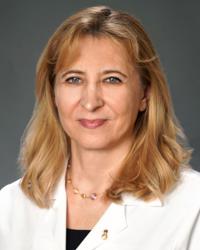
Zdenka Ena Segota, MD

Youssef Zeidan, MD
Youssef Zeidan, M.D., Ph.D., is an associate professor of radiation oncology at Florida International University Herbert Wertheim College of Medicine and a radiation oncologist at Lynn Cancer Institute, part of Baptist Health. Dr Zeidan previously served as an assistant professor of radiation oncology at the University of Miami. He received his dual M.D./Ph.D. degree from the Medical University of South Carolina. This was followed by four years of residency training in radiation oncology at Stanford University, where he served as chief resident.
Dr. Zeidan has authored more than 60 peer-reviewed publications in the field, focusing on tailored radiotherapy options. He received several grants and awards from the radiological society of North America and the American Society for Radiation Oncology. In recognition of his work, he received the Young Leaders Award from the Union for International Cancer Control. In 2025, he was awarded the VIVLI ambassador award and the Blackman Scholarship. Dr. Zeidan approaches cancer care by taking the time to understand each patient’s social and psychological perspectives. He believes this is key for developing a successful treatment plan.
When he is not treating patients, Dr. Zeidan enjoys spending time with family and friends, attending community events, visiting historical sites and reading.

Compassionate, Expert Cancer Care at Baptist Health
Related Stories
View All Articles
You Beat Breast Cancer. So How Long Before You Feel Normal Again?
October 28, 2026
6 min. read

Can What You Eat Help Lower Breast Cancer Risk? The Role of a Plant-Forward Diet
October 27, 2026
6 min. read

Beyond Detection: How AI 2.0 May Change the Future of Breast Cancer Screening
October 26, 2026
4 min. read