
After an Acute Leukemia Diagnosis, She Finds Her Way Back to ’Joyful’ Life
5 min. read
Baptist Health Cancer Care
For Leila Suyapa Macy, feeling sick began with symptoms that were difficult to ignore. Her legs hurt considerably. She was vomiting frequently. Even the smell of food became difficult to tolerate.
The symptoms persisted for about two months and eventually led to a diagnosis that would change her life: a specific type of acute leukemia — group of blood cancers that start in the bone marrow and cause the rapid production of abnormal white blood cells.
Diagnosed in March 2025, Ms. Macy turned to Baptist Health Herbert Wertheim Cancer Institute for treatment. After a year away from work and several months of cancer care, the longtime South Florida resident says her recovery is going “excellent.”
And she returned to work earlier this year, marking an important milestone after an unexpected medical journey.
Two Months of Feeling Unwell
Born in Progreso Yoro, Honduras 57 years ago, Ms. Macy has lived in South Florida for 38 years and currently lives in Miami with her husband, daughter and son, along with the family’s dogs, Mickey and Loki.
She describes herself as “very joyful” and says she shares that joy with everyone around her. Before her illness, Ms. Macy describes her general health as normal. Then she began experiencing persistent symptoms that affected how she felt and her ability to eat.
“I felt unwell and my legs hurt a lot,” she recalled. “I vomited a lot, and I couldn't stand the smell of food for two months.”
Testing ultimately revealed “Philadelphia chromosome-positive B-cell acute lymphoblastic leukemia,” or Ph-positive B-ALL. Acute lymphoblastic leukemia (ALL) is a fast-growing cancer of the blood and bone marrow. In Ph-positive ALL, leukemia cells carry an abnormal gene called BCR::ABL1 that produces a protein that promotes the growth of cancer cells.
“Ph-positive ALL has historically been regarded as a higher-risk subtype because of its potential to relapse,” explains Firas El Chaer, M.D., hematologist-oncologist and the chief of Leukemia and medical director of Infusion Services at Baptist Health Herbert Wertheim Cancer Institute. “However, risk is now assessed dynamically, with the depth and speed of response to treatment carrying significant weight.”

Patient Leila Macy and Firas El Chaer, M.D., hematologist-oncologist and the chief of Leukemia and medical director of Infusion Services at Baptist Health Herbert Wertheim Cancer Institute.
Targeting Ms. Macy's Leukemia
Ms. Macy remembers her first impression of Dr. El Chaer simply: “I thought he was very kind.”
Her treatment included oral medications and intravenous infusions. The pills, however, were not conventional chemotherapy. They were targeted therapies — medications designed to interfere with specific changes that help cancer cells survive and grow.
Ms. Macy received several targeted drugs during the course of treatment, including imatinib, dasatinib and later ponatinib. These medications target the abnormal BCR::ABL1 protein driving her leukemia.
She also received blinatumomab, an immunotherapy administered by continuous intravenous infusion. The medication helps the body's immune system identify and attack leukemia cells.
“Combining these approaches attacks the leukemia through complementary mechanisms and can provide an effective alternative to highly intensive conventional chemotherapy in selected patients with Ph-positive ALL,” Dr. El Chaer says.
Treatment required adjustments along the way. Ms. Macy experienced complications and side effects that included significant pain and gastrointestinal problems. During her first blinatumomab infusion, she developed chills, facial flushing, heart palpitations and pain in both legs. The infusion was temporarily stopped, medication was given to control the reaction, and treatment was safely resumed after her symptoms resolved.
Later gastrointestinal complications required additional treatment and ultimately led her care team to discontinue dasatinib and switch her to ponatinib.
Tests Show a Deep Remission
Throughout leukemia treatment, physicians use blood tests, bone-marrow examinations and increasingly sensitive molecular tests to determine whether cancer cells remain.
For Ms. Macy, those tests have provided encouraging results.
Her bone-marrow biopsy showed normal blood-cell production without an excess of immature leukemia cells, known as blasts. Specialized testing also found no measurable residual disease, or MRD — tiny numbers of cancer cells that can remain after treatment but may be too few to detect with conventional testing.
The BCR::ABL1 molecular marker associated with Ms. Macy's leukemia was also no longer detectable.
“Ms. Macy achieved complete molecular and measurable residual disease-negative remission, which is a highly favorable response,” Dr. El Chaer says.
Subsequent blood and bone-marrow testing has continued to show no detectable residual leukemia. While these findings indicate remission, Dr. El Chaer emphasizes that ongoing monitoring remains important because remission does not guarantee that leukemia can never return.
Returning to Everyday Life
Cancer treatment dramatically changed Ms. Macy's routine, including keeping her away from work for about a year. Now, she says she has resumed her normal daily activities. “After a year of not working, I returned to work in February,” she said.
Dr. El Chaer says there is no indication that Ms. Macy requires permanent physical restrictions as long as her blood counts remain stable, although a gradual return to work can help patients experiencing fatigue, reduced stamina or medication-related symptoms.
“Provided her blood counts remain stable, there is no indication in the record that Leila requires permanent restrictions,” explains Dr. El Chaer. “A gradual return may nevertheless be helpful, particularly if she continues to experience fatigue, reduced stamina or medication-related symptoms. Flexible hours, regular rest periods, time for appointments and the option to work remotely when unwell may ease the transition.”
Regular follow-up also remains part of Ms. Macy's life. She currently sees her care team approximately every four to six weeks.
Doctors will continue checking her blood counts and using sensitive molecular tests to look for signs of leukemia. Because Ms. Macy remains on ponatinib, her team also monitors her blood pressure, liver and pancreas function and watches for potential vascular and other complications associated with the medication.
Looking Ahead After Leukemia
As she moves forward, Ms. Macy is encouraged to gradually rebuild her stamina through activities such as walking and strength training while maintaining a balanced diet and staying current with routine medical care.
“There is no special diet proven to prevent leukemia from returning,” Dr. El Chaer says. “A balanced diet rich in vegetables, fruit, whole grains and adequate protein can support recovery, while good hydration and limiting highly processed foods are sensible general measures.”
For Ms. Macy, returning to work represents a tangible sign of how far she has come since March 2025 — from persistent symptoms and an unexpected leukemia diagnosis to treatment and remission.
She also looks back positively on the care she received. “It was excellent, and they took very good care of me,” Ms. Macy said.
Asked whether she would recommend the cancer institute to family members or friends, her answer was unequivocal.
“Of course, yes, because their care is excellent and everyone is very professional.”
Featured Provider
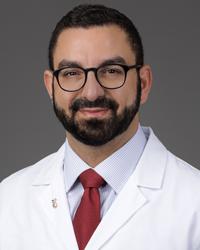
Firas El Chaer, MD
Firas El Chaer, M.D., MSHCM, is a board-certified hematologist-oncologist and the chief of Leukemia and medical director of Infusion Services at Baptist Health Herbert Wertheim Cancer Institute. He specializes in the treatment of leukemia, with a primary focus on acute myeloid leukemia, acute lymphoblastic leukemia, chronic myelomonocytic leukemia and chronic myeloid leukemia. His expertise also extends to myeloproliferative neoplasms (primary myelofibrosis, essential thrombocytosis and polycythemia vera), clonal hematopoiesis of indeterminate potential as well as bone marrow failure disorders, including myelodysplastic syndromes and aplastic anemia.
Dr. El Chaer utilizes personalized, targeted therapies to enhance treatment effectiveness and improve patient responses. Additionally, he has a keen interest in measurable residual disease detection and monitoring, which can improve patients’ long-term outcomes and survival rates by catching early signs of relapse so treatments and adjusting treatments accordingly.
Prior to joining Baptist Health, Dr. El Chaer was an associate professor of medicine in the Division of Hematology-Oncology at the University of Virginia School of Medicine. He also served as medical director of the Cancer Service Line – Infusion Centers and medical director of the Chronic and Acute Leukemia Research Team at the University of Virginia Comprehensive Cancer Center.
Dr. El Chaer earned his medical degree at the University of Balamand in Beirut, Lebanon. He served as chief resident during an internal medicine residency at the Icahn School of Medicine at Mount Sinai in Englewood, N.J. He then completed a fellowship in infectious diseases for immune-compromised cancer patients at the combined program of Baylor College of Medicine and the University of Texas at MD Anderson Cancer Center in Houston. He also completed a fellowship in hematology and oncology with a focus on blood disorders and a built-in fellowship in stem cell transplantation at the University of Maryland School of Medicine in Baltimore, where he served as chief fellow. He is board certified by the American Board of Internal Medicine in internal medicine, infectious diseases, hematology and medical oncology.
In addition to his patient care responsibilities, Dr. El Chaer is a clinical investigator and principal investigator for numerous pharmaceutical-sponsored clinical trials and investigator-initiated trials. He has been recognized with multiple awards across different areas of professional practice, including his clinical skills, research contributions and teaching abilities. One such award is the prestigious Arnold P. Gold Foundation Humanism in Medicine Award, which honors mentors who demonstrate care and compassion in the teaching and advising of medical students.
Dr. El Chaer is an active member of numerous professional organizations. He also contributes to the scientific community by presenting his research findings at national and international symposiums, editing and reviewing papers for medical publications and publishing his research in peer-reviewed journals, with more than 50 articles appearing in prominent journals such as Blood and JAMA Oncology.
Dr. El Chaer’s approach to patient care is deeply rooted in his personal experience, having witnessed the profound impact of non-Hodgkin lymphoma on his father and family. He prioritizes clear, compassionate communication and strives to connect with his patients and their families on a personal level, not only addressing medical needs but also serving as a supportive guide through each step of the cancer journey. His goal is to provide care that is as personal as it is professional, creating a support system that goes beyond traditional treatment.
Dr. El Chaer is fluent in English, French and Arabic. In his free time, he enjoys backpacking and road cycling and pushing his limits with CrossFit. He finds relaxation in listening to audiobooks and podcasts and seeks adventure by traveling to new countries and immersing himself in diverse cultures, exploring rich histories and discovering unique cuisines. This blend of physical and intellectual pursuits helps Dr. El Chaer recharge and stay inspired.

Compassionate, Expert Cancer Care at Baptist Health
Related Stories
View All Articles
Young Mom on Her Cancer Journey: 'I'm a Breast Cancer Thriver'
October 6, 2026
11 min. read
Video

Ten Years Later, This Breast Cancer Survivor is Embracing Life—and Her New Grandson
October 1, 2026
7 min. read
Video

From Stage 4 Prostate Cancer to Marathon Finish Line: Mario’s Journey of Faith and Perseverance
September 30, 2026
7 min. read