
After an Abnormal Mammogram: Why Timely Follow-Up Can Be Life-Saving
7 min. read
Baptist Health Cancer Care
What an abnormal result does mean is that additional evaluation is needed—and that follow-up should happen promptly. Moving quickly from screening to diagnostic testing helps provide answers, reduces uncertainty and, when cancer is found, can lead to earlier treatment and better outcomes.
Healthcare experts emphasize that timely follow-up after an abnormal mammogram is one of the most important steps a patient can take to protect their health.
Understanding an Abnormal Mammogram
A screening mammogram is designed to detect breast changes before symptoms develop. Sometimes the images reveal an area that requires a closer look, such as:
- A suspicious mass or lump
- Calcifications (tiny calcium deposits)
- An area of asymmetry
- Distortion of normal breast tissue
- Dense tissue that obscures a clear view
Additional imaging—often diagnostic mammography, breast ultrasound or breast MRI—helps determine whether these findings are harmless or require further evaluation.
"An abnormal mammogram is not a diagnosis of cancer," says diagnostic radiologist Juliette The, M.D., with the Eugene M. & Christine E. Lynn Cancer Institute at Boca Raton Regional Hospital, part of Baptist Health. "It simply tells us that we need more information so we can accurately understand what we're seeing."
Dr. The explains that advances in breast imaging allow radiologists to identify subtle changes that deserve careful evaluation, even though many will ultimately be benign.
"Our goal is to distinguish normal breast changes from findings that require additional testing," Dr. The says. "That careful process helps ensure patients receive the right care at the right time."
Why Prompt Follow-Up Matters
Although many abnormal mammograms are not cancer, delaying recommended follow-up can create significant problems.
Waiting weeks or months before scheduling additional imaging or a biopsy may allow a cancer, if present, to continue growing. Delays can also increase emotional stress as patients live with unanswered questions.
Experts recommend completing recommended diagnostic imaging as soon as reasonably possible after an abnormal screening exam. If a biopsy is recommended, it should also be scheduled promptly.
"The sooner we complete the diagnostic workup, the sooner patients have answers," Dr. The says. "Whether the findings are benign or cancerous, timely follow-up allows us to move forward with confidence instead of uncertainty."
What Happens After an Abnormal Mammogram?
The next steps depend on what radiologists see on the screening images.
Many patients are simply called back for additional mammogram views that provide a more detailed look at one area of the breast. Others may undergo an ultrasound to evaluate whether a finding represents a fluid-filled cyst or a solid mass.
Some patients will need a breast MRI for additional evaluation, particularly if they have dense breast tissue or are at higher risk for breast cancer.
If imaging suggests that a suspicious area cannot be confidently identified as benign, a needle biopsy is usually recommended. During this minimally invasive procedure, a physician removes small tissue samples for laboratory analysis.
Most biopsies are performed using local anesthesia and allow patients to return home the same day.
Every step of the evaluation is designed to answer specific clinical questions while avoiding unnecessary procedures whenever possible, according to Kerry-Ann McDonald, M.D., breast surgical oncologist with Eugene M. & Christine E. Lynn Cancer Institute at Boca Raton Regional Hospital, part of Baptist Health.
"Most patients appreciate knowing there is a structured process," Dr. McDonald says. "Each test builds on the previous one so we can make the most accurate diagnosis possible."
She adds that careful coordination among radiologists, surgeons, pathologists and nurse navigators helps prevent unnecessary delays.
"Our priority is making sure patients don't feel lost in the system," Dr. McDonald says. "Coordinated care helps people move efficiently from one step to the next."
Reducing Anxiety Through Clear Communication
Waiting for additional testing is often the hardest part of the process.
Many patients worry not only about cancer but also about work, family responsibilities and the unknown.
Healthcare teams encourage patients to ask questions and understand exactly why additional testing has been recommended.
"It is completely normal to feel anxious after receiving an abnormal mammogram result," Dr. McDonald says. "We encourage patients to stay engaged, ask questions and keep their follow-up appointments so they can get clear answers as quickly as possible."
Open communication can help patients better understand what to expect, how long results may take and what the possible outcomes might be.
When a Biopsy Is Needed
The recommendation for a biopsy can sound alarming, but it remains an important diagnostic tool rather than confirmation of cancer.
Many breast biopsies identify noncancerous conditions such as fibroadenomas, cysts or other benign breast changes.
If cancer is diagnosed, however, obtaining that information early provides valuable opportunities for treatment planning.
Modern breast cancer care involves a multidisciplinary team that may include breast surgeons, medical oncologists, radiation oncologists, radiologists, pathologists, genetic counselors and supportive care specialists.
Because treatment options continue to improve, many patients today experience excellent outcomes, particularly when cancer is found at an early stage.
Coordinated Care Makes a Difference
Patients often feel overwhelmed by multiple appointments, imaging studies and consultations.
A coordinated breast care program helps streamline this process by bringing specialists together and improving communication among members of the healthcare team.
"Patients should never feel they have to navigate this journey alone," explains breast surgical oncologist Mehran Habibi, M.D., chief of breast surgery at Baptist Health Herbert Wertheim Cancer Institute and deputy chief of breast surgery for Baptist Health Cancer Care. "A multidisciplinary team works together to make sure every step happens efficiently and thoughtfully."
Care coordination also helps reduce unnecessary duplication of testing and allows treatment decisions to be made using expertise from multiple specialties.
"When specialists communicate closely, patients receive more personalized care and experience fewer delays," Dr. Habibi says. "That collaboration can make an enormous difference during an already stressful time."
Addressing Health Disparities
Research has shown that delays in follow-up after abnormal mammograms are more common among certain populations, including women facing financial barriers, transportation challenges, language differences or limited access to healthcare.
These delays may contribute to later-stage cancer diagnoses and poorer outcomes.
Healthcare systems continue working to reduce these disparities through patient navigation services, improved scheduling, community outreach and education.
"No matter a patient's background, timely follow-up after an abnormal mammogram is essential," Dr. Habibi says. "Everyone deserves access to prompt evaluation, clear communication and high-quality breast care."
What Patients Can Do
Patients play an important role in ensuring timely follow-up after an abnormal mammogram.
Experts recommend:
- Schedule recommended follow-up appointments as soon as possible.
- Keep copies of imaging reports and know where previous mammograms were performed.
- Ask questions if recommendations are unclear.
- Notify the healthcare team about new breast symptoms such as a lump, nipple discharge or skin changes.
- Do not postpone recommended imaging or biopsy because of fear or anxiety.
Family members and friends can also provide valuable support by helping patients keep appointments, organize medical information and ask questions during visits.
Early Answers Lead to Better Outcomes
Most abnormal mammograms do not result in a breast cancer diagnosis. Even so, every abnormal finding deserves timely evaluation.
Early follow-up provides reassurance when results are benign and allows treatment to begin sooner when cancer is detected. It also helps reduce emotional stress by replacing uncertainty with answers.
"An abnormal mammogram is the beginning of an evaluation—not the end of the story," Dr. The says. "Following through with recommended testing gives patients the best opportunity for an accurate diagnosis and, when needed, the earliest possible treatment."
Dr. McDonald stresses that prompt action empowers patients — rather than leaving them waiting. "Our message is simple: don't ignore an abnormal mammogram," she says. "Getting the recommended follow-up is one of the most important things you can do for your health."
Advances in breast imaging, diagnosis and multidisciplinary treatment have transformed breast cancer care, adds Dr. Habibi.
"When patients receive timely evaluation and coordinated care, we can move from uncertainty to answers and, when necessary, begin treatment as early as possible," Dr. Habibi says. "Early action truly saves lives."
Visit BaptistHealth.net/Mammo to learn more or schedule mammogram. Eligible women can now schedule a screening mammogram without a provider’s order.
Featured Providers


Kerry-Ann Camille McDonald, MD
Kerry-Ann McDonald, M.D., is a breast surgical oncologist at the Baptist Health Eugene M. & Christine E. Lynn Cancer Institute and Baptist Health Christine E. Lynn Women’s Health & Wellness Institute. Dr. McDonald specializes in benign and malignant breast disease, nipple-sparing surgery, breast-conserving surgical therapies with a focus on the hidden scar technique, and sentinel lymph node surgery with tailored treatment of the axilla. She also uses MarginProbe technology in nearly every lumpectomy surgery. This tool detects cancerous cells at the edges of the surgical specimen, decreasing the need for additional surgeries. Dr. McDonald joined the Lynn Women’s Health & Wellness Institute after completing a breast surgical oncology fellowship at Roswell Park Cancer Institute in Buffalo, New York.She currently serves on the Charles E. Schmidt College of Medicine faculty at Florida Atlantic University, where she mentors surgical residents and medical students. Dr. McDonald is also active in the community and has given many lectures on breast cancer and breast surgery to increase awareness of the disease, particularly in minority communities.Dr. McDonald’s research has been published in several peer-reviewed publications, including the Annals of Surgical Oncology, Journal of Vascular Surgery and Proceedings of the National Academy of Sciences of the United States of America. She has also co-written chapters in the medical textbooks Success in Academic Surgery: Basic Science and Preventive Oncology for the Gynecologist.Dr. McDonald takes a personalized, comprehensive approach to patient care. She chose breast cancer surgery because it is a field with a strong continuity of care. Dr. McDonald typically follows patients for at least five years following their surgery and enjoys developing a relationship with each woman she treats. When she is not treating patients, Dr. McDonald enjoys exercising, hiking and spending time with family.
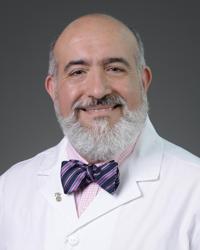
Mehran Habibi, MD
Mehran Habibi, M.D., MBA, is an internationally recognized surgical breast oncologist with over two decades of clinical and academic leadership. He serves as chief of breast surgery at Baptist Health Herbert Wertheim Cancer Institute and deputy chief of breast surgery for Baptist Health Cancer Care. His clinical expertise includes oncoplastic and nipple-sparing mastectomies, nerve-preserving and risk-reducing procedures, and advanced intraoperative tumor localization and margin assessment technologies.
Before joining Baptist Health, Dr. Habibi held senior leadership roles at Northwell Health, including director of breast surgery at Staten Island University Hospital, regional chief of breast surgery for Northwell’s Western Region and director of international program development for Northwell Cancer Institute. He also served as an associate professor of surgery at the Donald and Barbara Zucker School of Medicine at Hofstra/Northwell. Prior to that, he spent more than 15 years at Johns Hopkins University School of Medicine, where he founded and led the Breast Center at the Bayview Medical Center.
Dr. Habibi’s research program spans surgical innovation, genomics and tumor microenvironment studies. His current investigations include wire-free localization techniques, intraoperative margin assessment tools and studies of tumor tissue mechanics, breast cancer genomics, and the role of the microbiome in breast cancer progression and therapy response. His research has been supported by multiple grants and published in high-impact peer-reviewed journals.
Certified by the American Board of Surgery, Dr. Habibi is a fellow of the American Society of Breast Surgeons and a reviewer for The Breast Journal and JAMA Surgery. He is also an editorial board member of Archives of Breast Cancer.
Dr. Habibi earned his medical degree at Islamic Azad University in Tehran and completed surgical training at Pennsylvania Hospital and St. Luke’s Hospital. He completed a fellowship in complex surgical oncology at the Medical College of Virginia and holds a master’s degree in business administration from Virginia Commonwealth University.
Outside the operating room, Dr. Habibi is known for his love of photography, swimming and baking—where his pastry skills rival his surgical precision.

Compassionate, Expert Cancer Care at Baptist Health
Related Stories
View All Articles
You Beat Breast Cancer. So How Long Before You Feel Normal Again?
October 28, 2026
6 min. read

Can What You Eat Help Lower Breast Cancer Risk? The Role of a Plant-Forward Diet
October 27, 2026
6 min. read

Beyond Detection: How AI 2.0 May Change the Future of Breast Cancer Screening
October 26, 2026
4 min. read